Roanoke: The Lost Colony
Episode 2 · 1584–1590 · Roanoke Island, North Carolina · 20 min 19 s
Episode 2 · 20 min 19 s · Published 26 September 2026
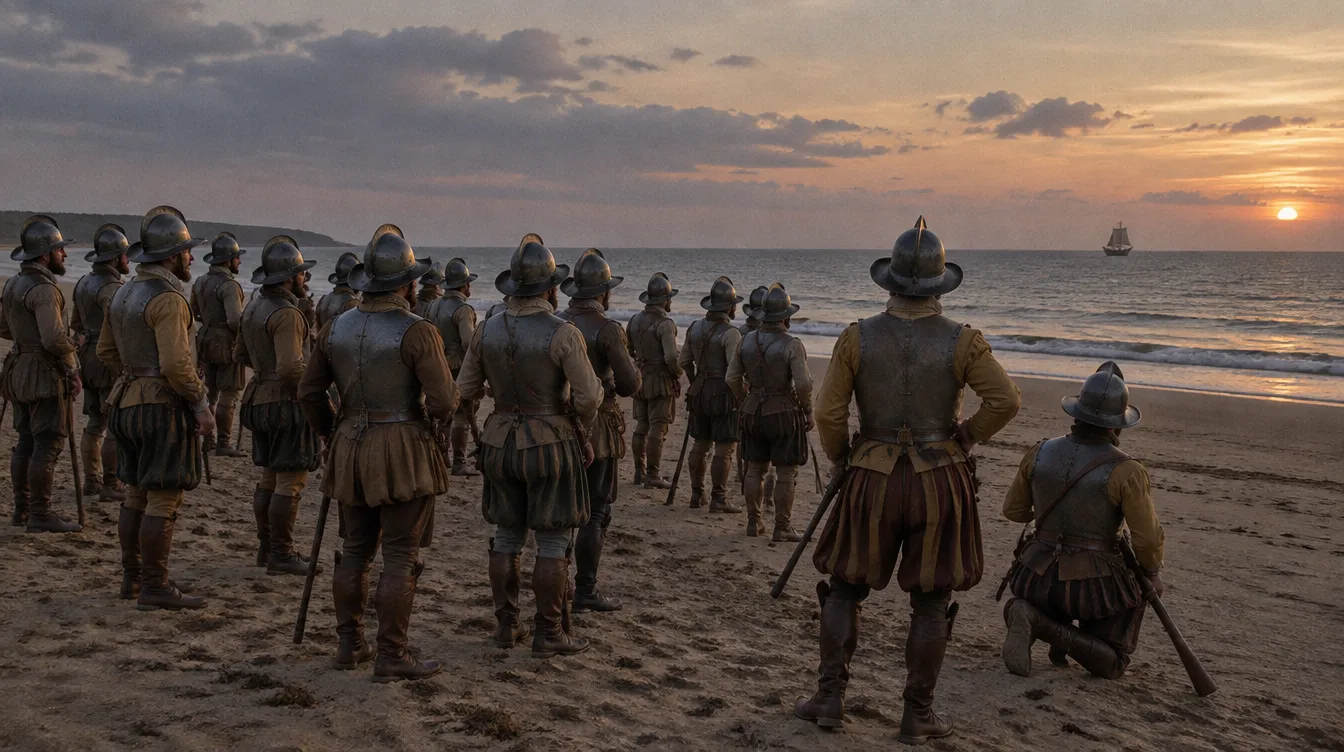
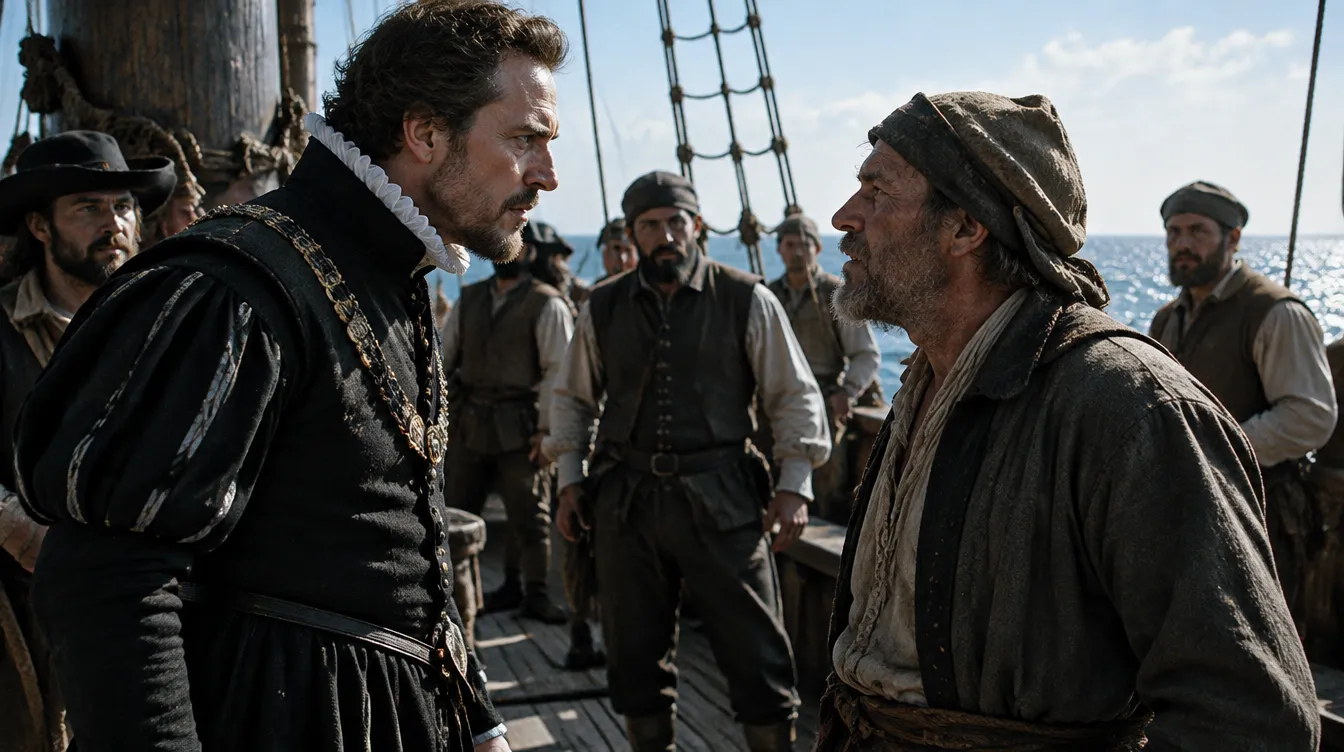
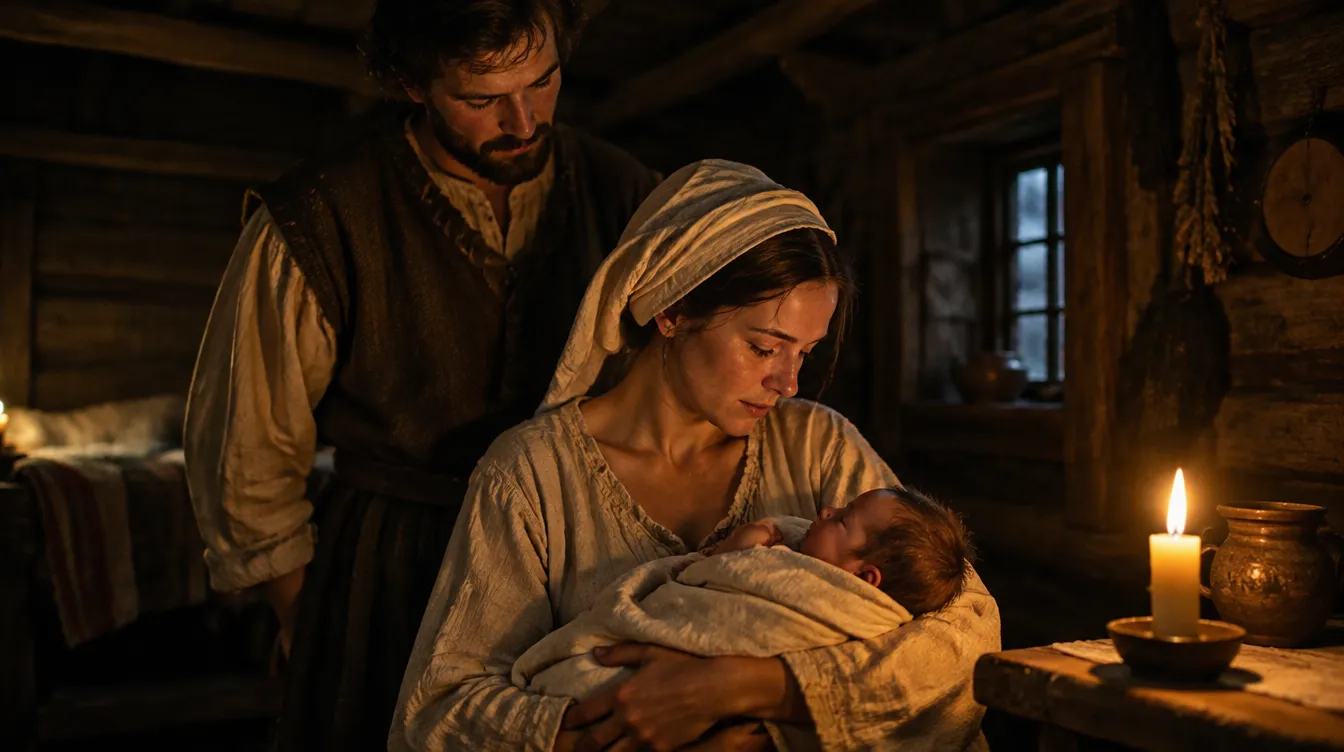
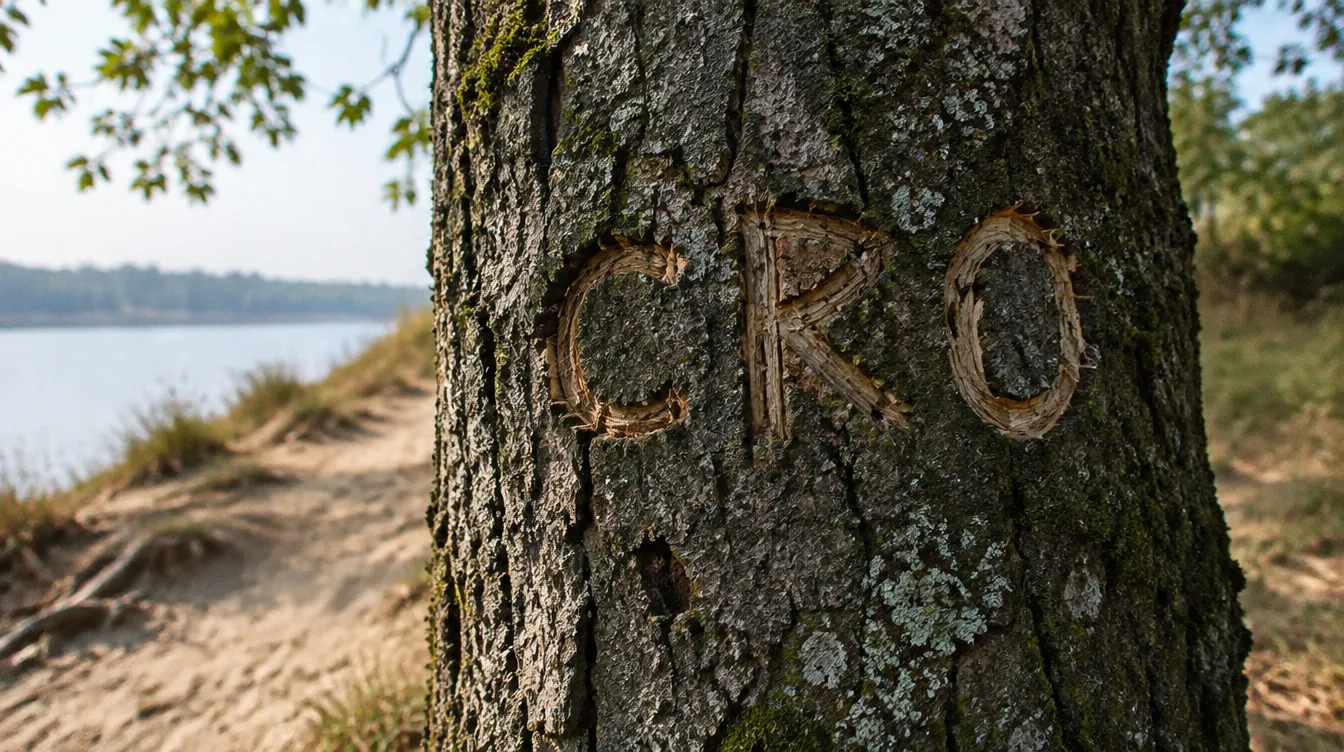
AI-generated reconstruction, not an archival photograph.
Get the free field guide to this episode
17 pages: the full timeline, the maps, the cast, and every source, so you can check any of it yourself. Free, and yours to keep whether or not you ever buy anything.
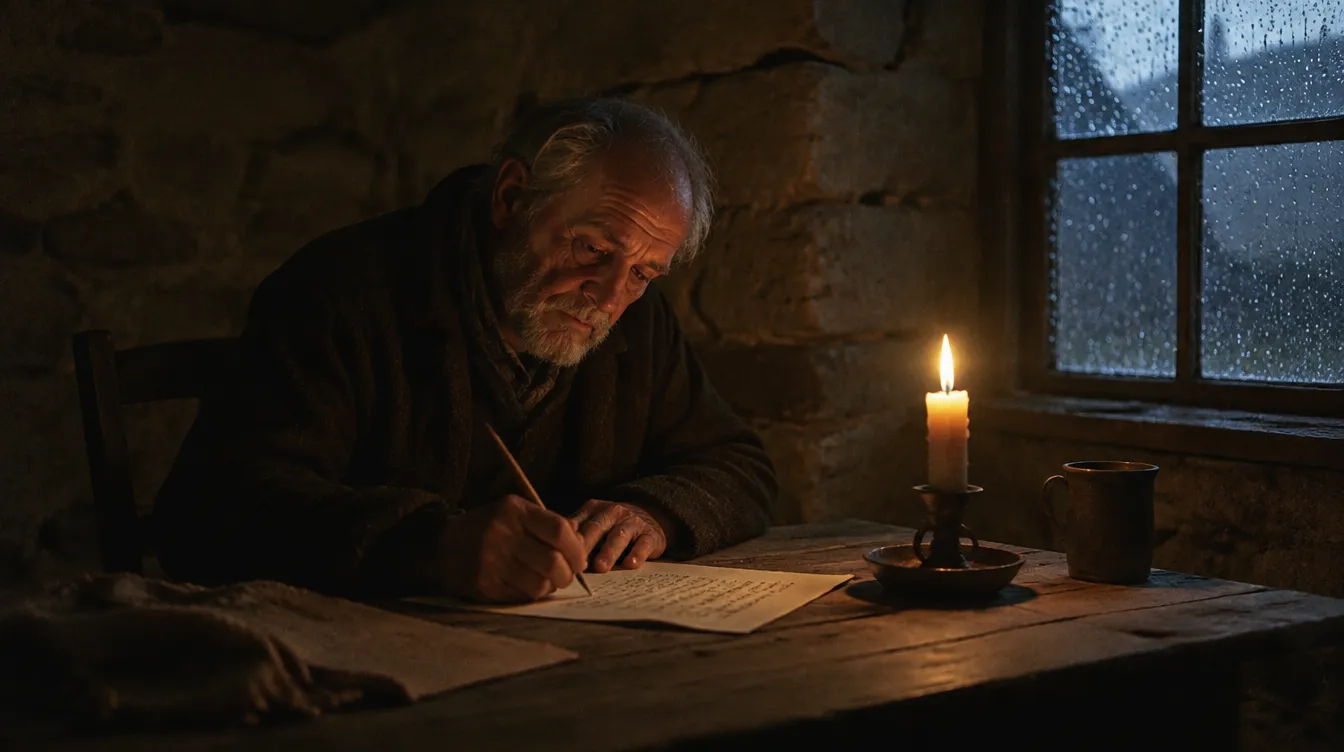
On the eighteenth of August 1590, a boat came ashore on an island off the coast of what is now North Carolina. The man in it was John White. He had been governor of the English settlement there, and he had been away for three years. He had left a hundred and fifteen people behind. Among them were his daughter, his son-in-law, and his granddaughter, who had been born on that island exactly three years earlier, to the day.
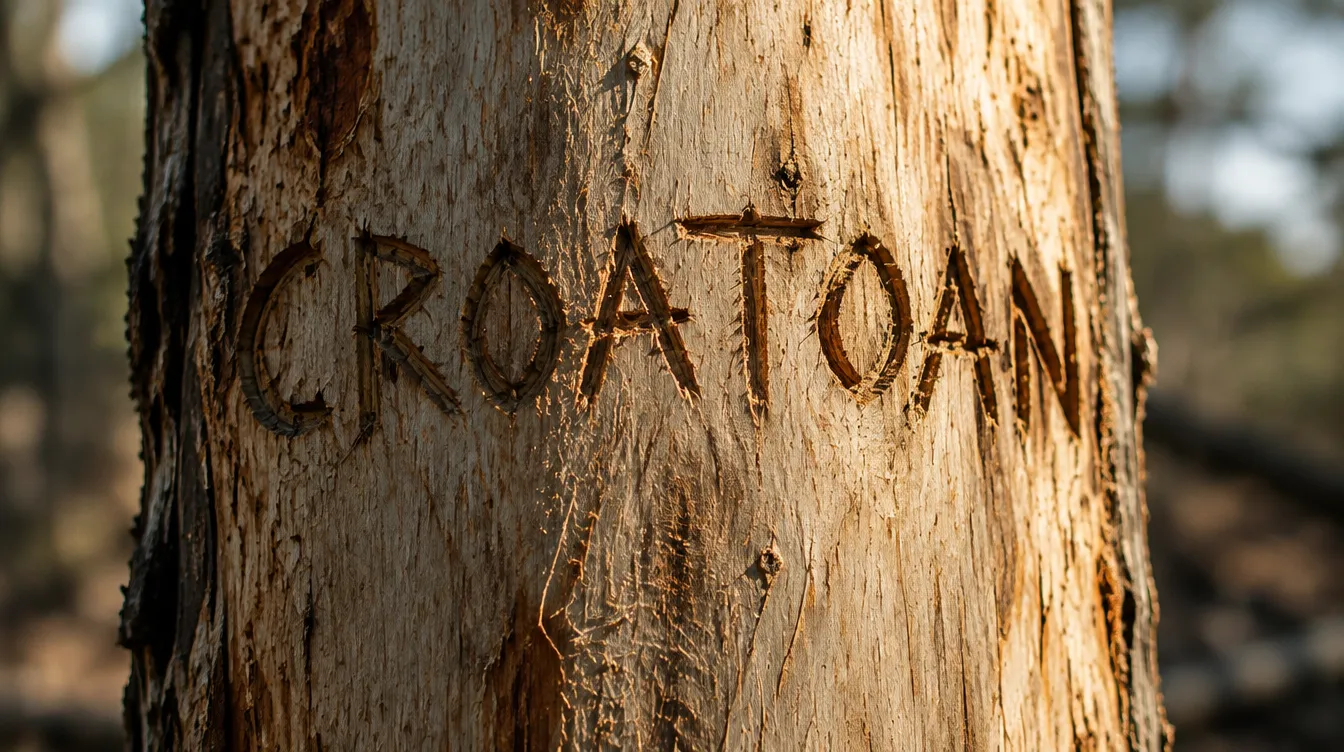
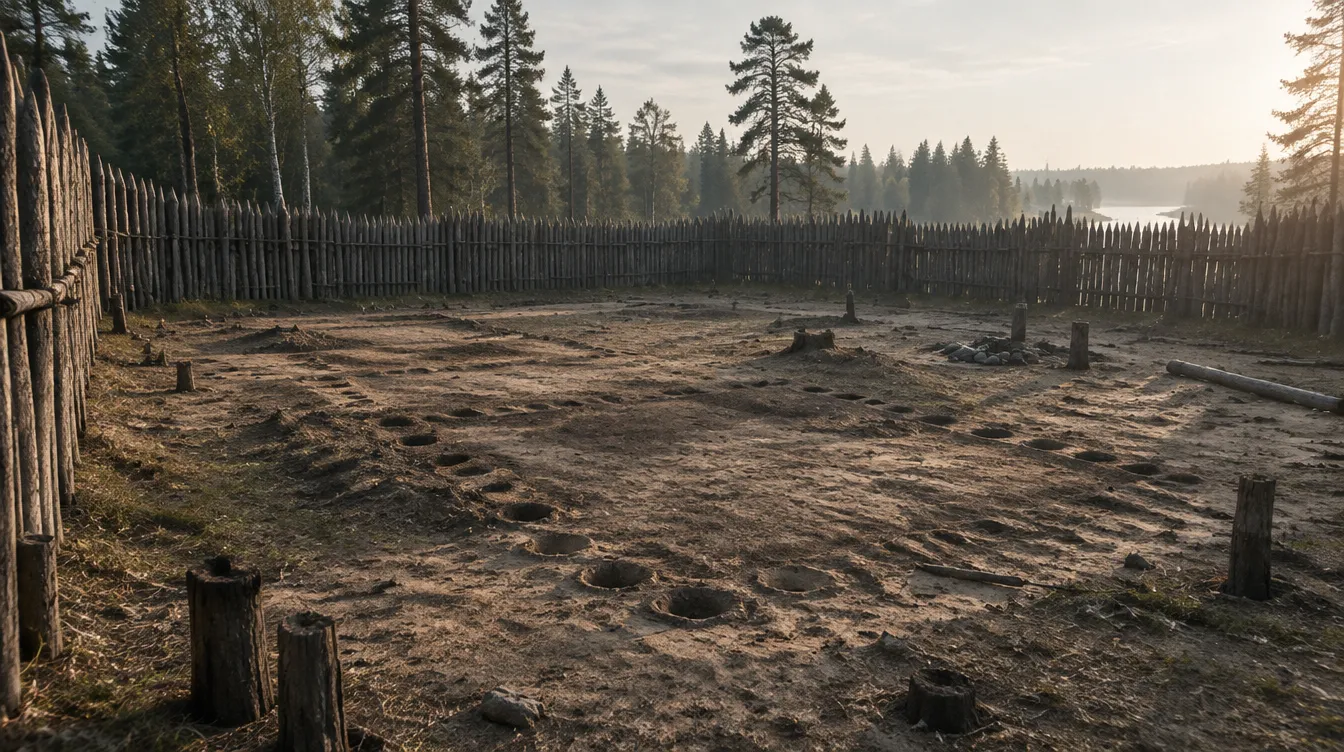
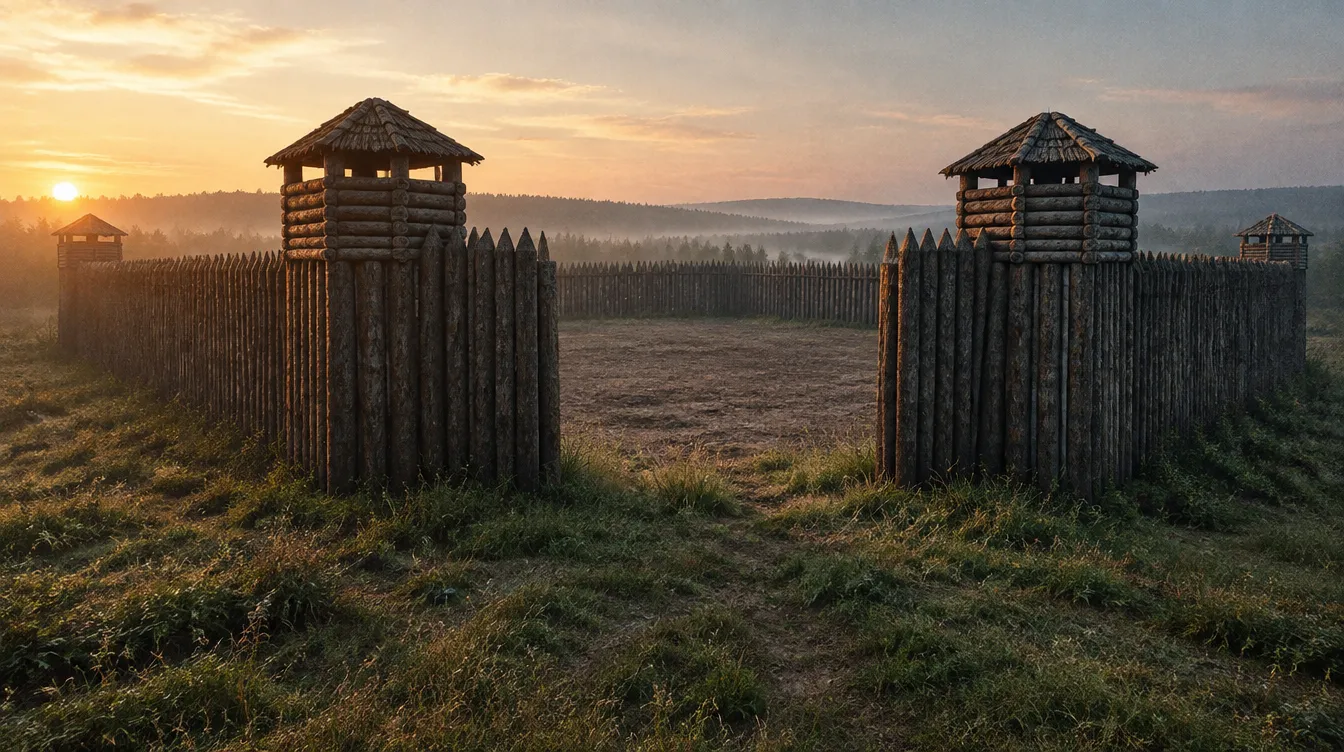
The settlement was gone. Not burned, not scattered — taken down, timber by timber, and a wall of tree trunks built around the empty ground where it had stood. On one post of that wall, five feet up, the bark had been stripped away and a single word cut into the wood in what White called fair capital letters: CROATOAN.
Before he sailed, they had agreed exactly what they would do if they had to move. They would carve the name of the place they were going. And if they were in danger, they would carve a cross above it.
There was no cross.
Why England was there at all
It began with a piece of paper. On 25 March 1584, Elizabeth I granted Walter Raleigh a licence to occupy lands in the New World that no Christian prince already held. Spain had been taking silver out of the Americas for sixty years. England had nothing there, a war with Spain, and a shortage of money — and a coastline full of captains happy to be called explorers and paid like pirates.
Raleigh financed it and stayed at court. He never crossed the Atlantic. The first expedition he sent, in 1585, was not a village but a garrison: six hundred soldiers and seamen under Sir Richard Grenville, meant to raid Spanish shipping and find something that would pay.
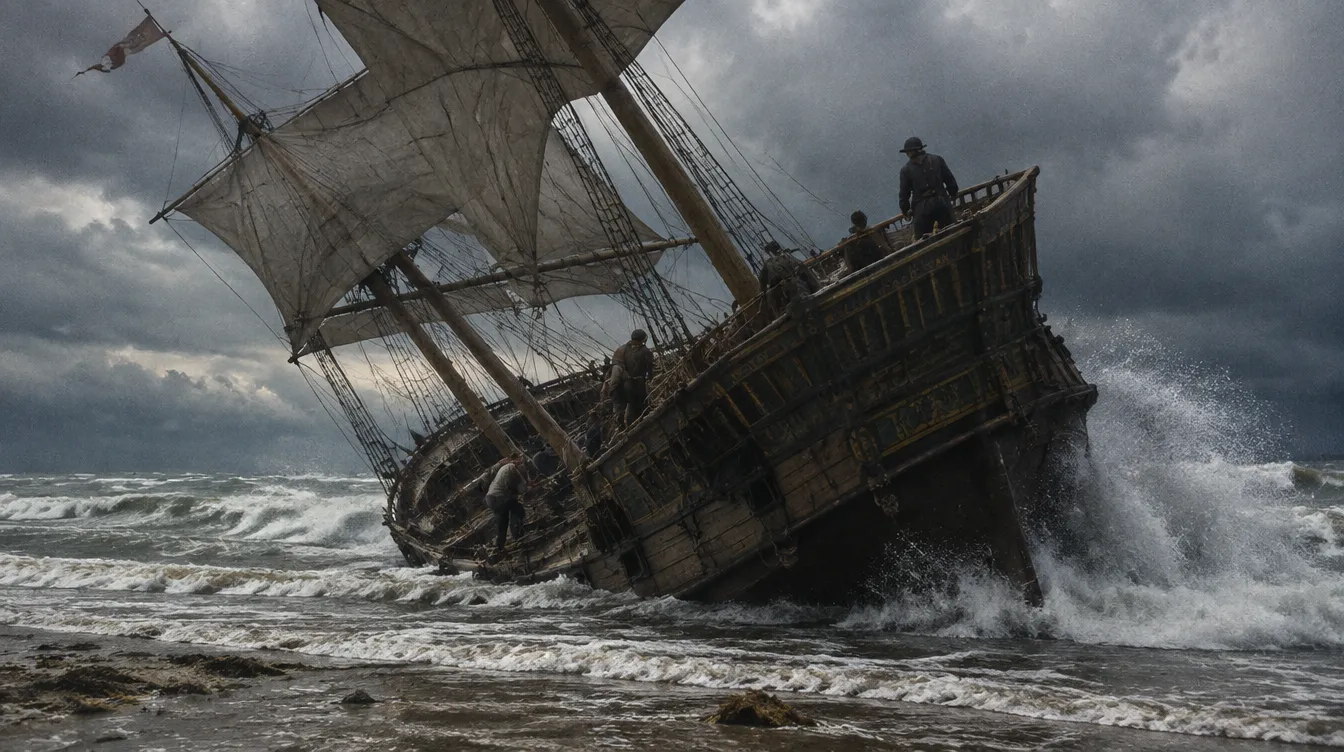
It went wrong before anyone came ashore. On 29 June the flagship Tiger ran aground crossing the shallow bar into the sounds, and seawater ruined most of the food for the year. From that day the English had to be fed by the people who already lived there. Within weeks a silver cup went missing from an Algonquian town called Aquascogoc, and the English burned the town and its standing corn.
By the following summer the relationship had collapsed entirely. Ralph Lane, left in command of about a hundred and seven men, attacked the Roanoke weroance Pemisapan on 1 June 1586. Pemisapan was shot, pursued into the woods, and one of Lane’s men came back carrying his head. Eight days later Francis Drake’s fleet appeared, a storm tore up the anchorage, and Lane took the passage home — abandoning three of his own men who were away on an errand. Grenville arrived weeks later to find the place empty, left fifteen men to hold it, and sailed.
Those fifteen are the first people to disappear in this story. Nobody counts them.
The colony that was different
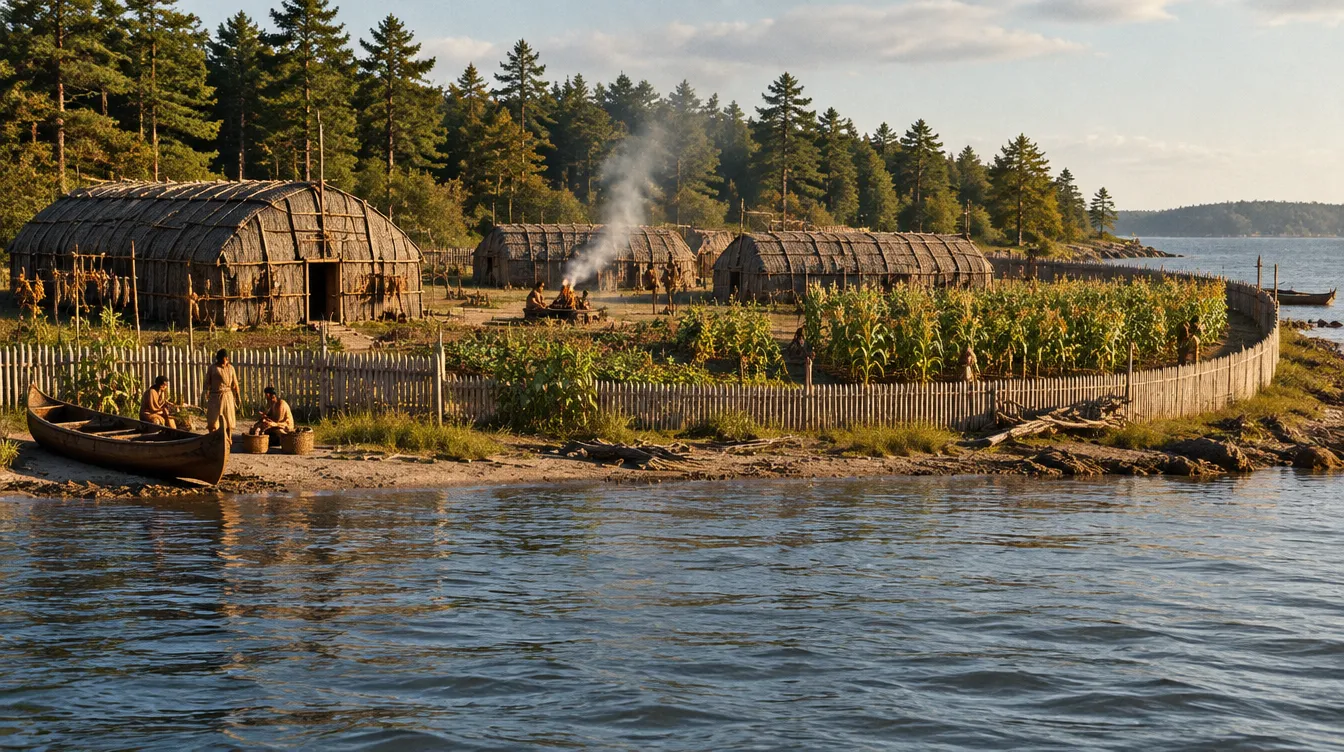
The second colony was meant to last. In January 1587 Raleigh chartered a company with a governor and twelve assistants — the City of Raleigh in Virginia. Its members were promised land. They brought their families: about a hundred and fifteen people, roughly seventeen of them women, at least nine of them children. The governor was John White, an artist whose watercolours of the Carolina coast remain the finest surviving record of the Algonquian towns of that era.
They were not going to Roanoke. The plan was the Chesapeake, further north, in deeper water, away from the wreckage Lane had left. Roanoke was a stop to collect Grenville’s fifteen men.
They found no one — a fort pulled down, houses still standing with melons growing inside them, deer feeding in the rooms, and the bones of one man. And when the party tried to return to the ships, the pilot’s men refused to carry the colonists further north. White’s own account records a gentleman aboard calling out to the sailors, “charging them not to bring any of the planters back againe”, and “saying that the Summer was farre spent”.
So a hundred and fifteen people promised the Chesapeake were unloaded onto the island where the English had killed the local leader fourteen months before.
Six days later an assistant named George Howe walked into the shallows alone to catch crabs and was found with, in White’s words, “sixteen wounds with their arrowes”. The colonists struck back at night — and attacked the wrong people. The men they surprised were Croatoan, Manteo’s own community, the only allies they had, gathering corn from fields the Roanoke people had abandoned.
Two weeks later, two ceremonies. On 13 August Manteo was baptised and made lord of Roanoke by Raleigh’s order. On 18 August White’s daughter Eleanor gave birth to a girl. In her father’s words, “shee was named Virginia”.
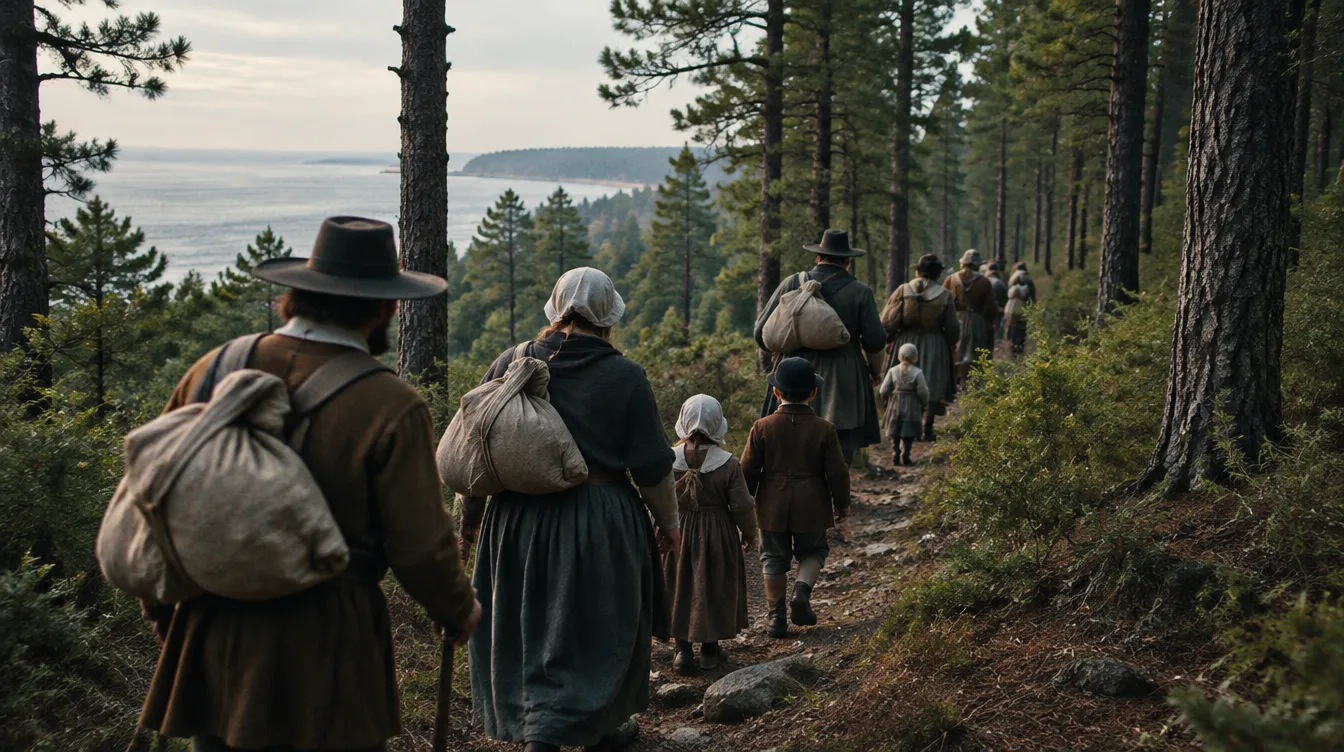
Nine days after that, John White got back on a ship and left. It was not his idea; the assistants pressed him to argue for relief in person, and he refused twice before they put it in writing that he went at their request. Two things were agreed before he sailed. They would not stay on Roanoke — his account says plainly that they intended to “remove 50 miles further up into the maine”. And they would carve the name of wherever they went, with a cross above it if they left in trouble.
He expected to be back the following spring. What arrived instead was the Spanish Armada, a relief fleet impounded for the defence of the realm, a privateering voyage that was itself robbed by French privateers off Africa, and three years of a painter with no money trying to buy passage on somebody else’s ship.
What the ground says, and what it does not
Four kinds of evidence bear on where they went, and none of them closes the case.
The weather. A 1998 study in Science reconstructed rainfall from the growth rings of very old bald cypress trees in the region. The driest three-year stretch in eight hundred years of that record is 1587 to 1589 — exactly the years the colony was left alone. That does not say what happened to them. It says the year they were abandoned was the worst possible year to depend on someone else’s harvest.
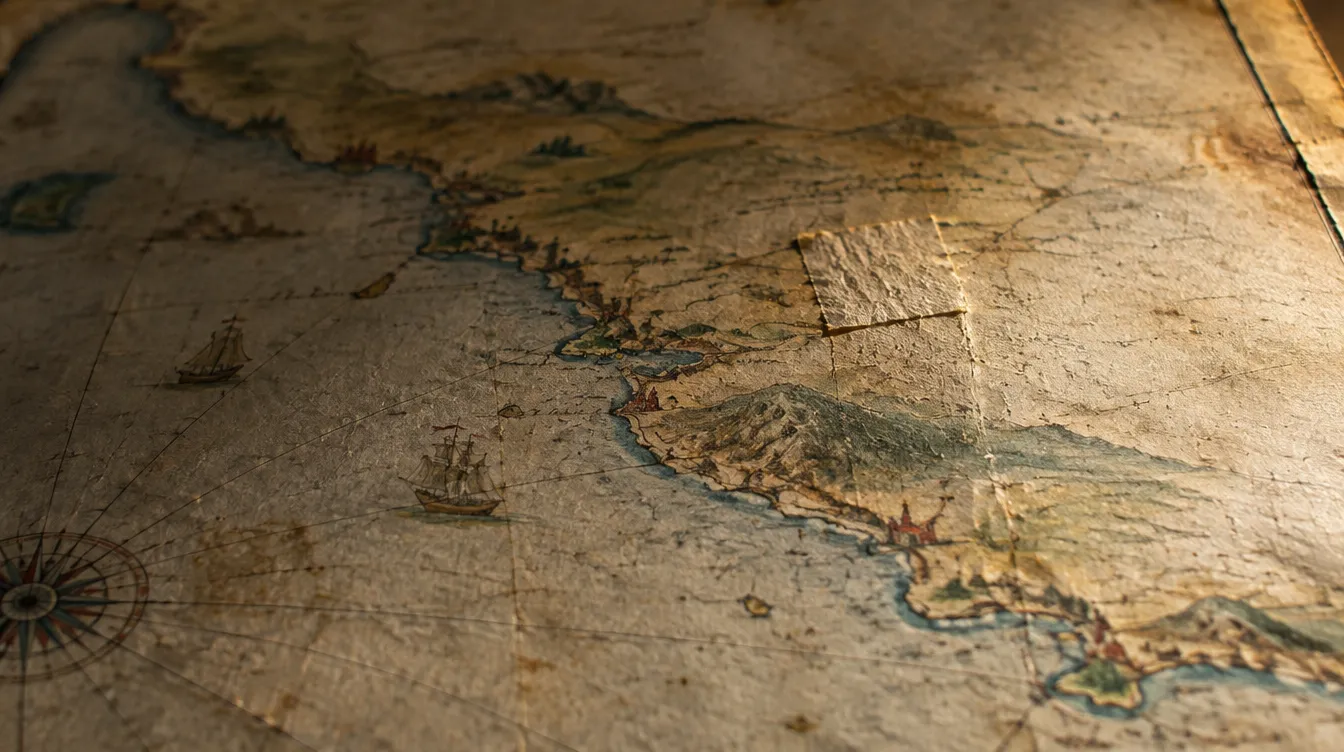
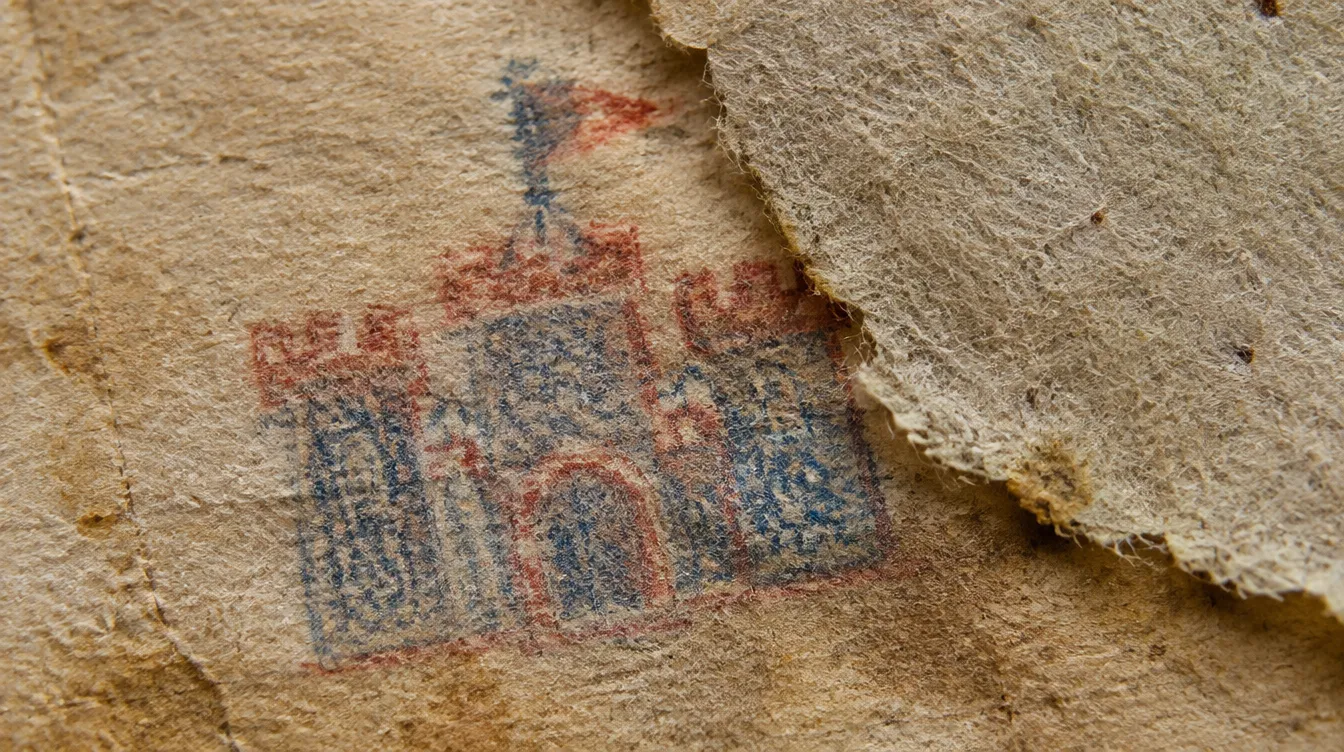
The map. White drew a chart of the coast, now in the British Museum. In 2012 researchers examined two small paper patches glued onto it. Hidden under one was a symbol in red and blue that looks like a fort, at the head of Albemarle Sound — about fifty miles inland, the direction the colonists said they were going.
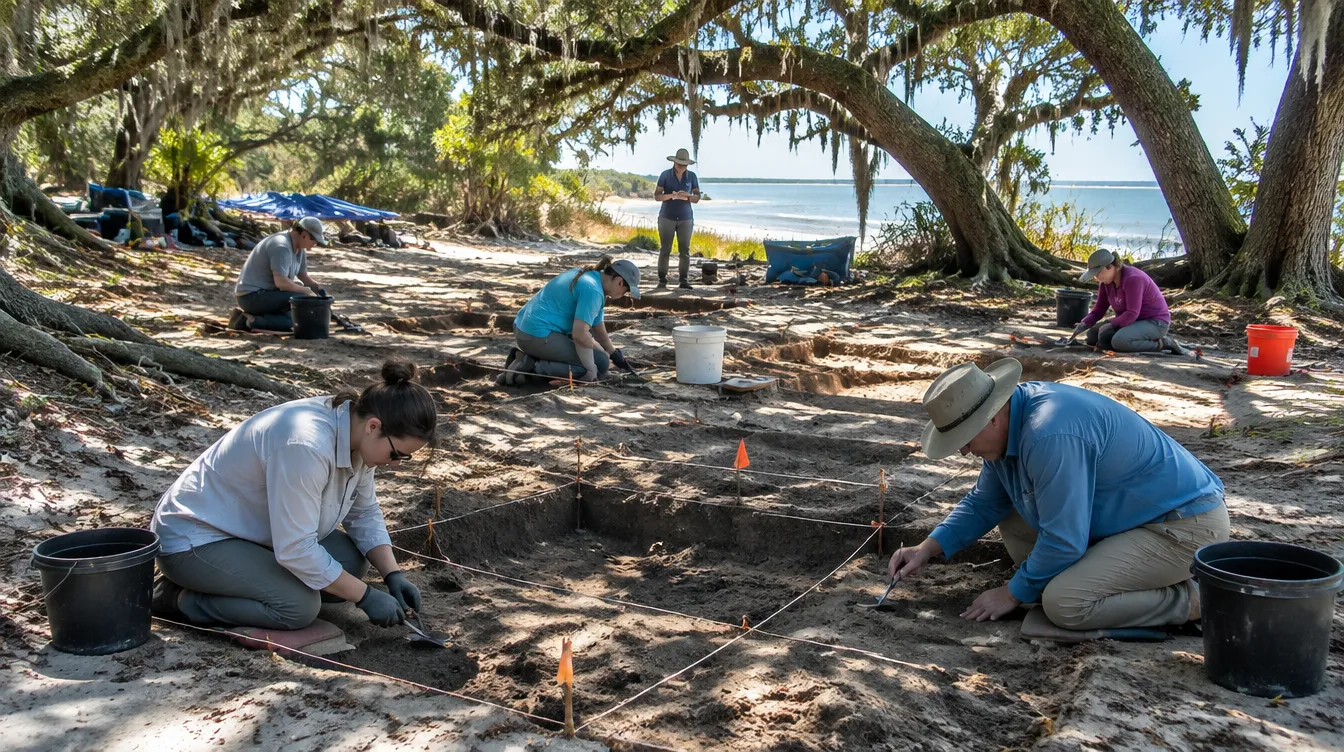
The inland sites. Archaeologists dug there, at places called Site X and later Site Y, and found English pottery of the right period inside a Native American site: Border ware, a North Devon jar, Frechen stoneware, a Spanish olive jar. Enough for a household. Not enough for a colony, and the foundation that dug it said so for years — no fort, no buildings, no graves. In June 2026 that same foundation announced that Sites X and Y together are where the colonists settled. That announcement is a press statement, not a peer-reviewed paper, and no independent team has assessed it.
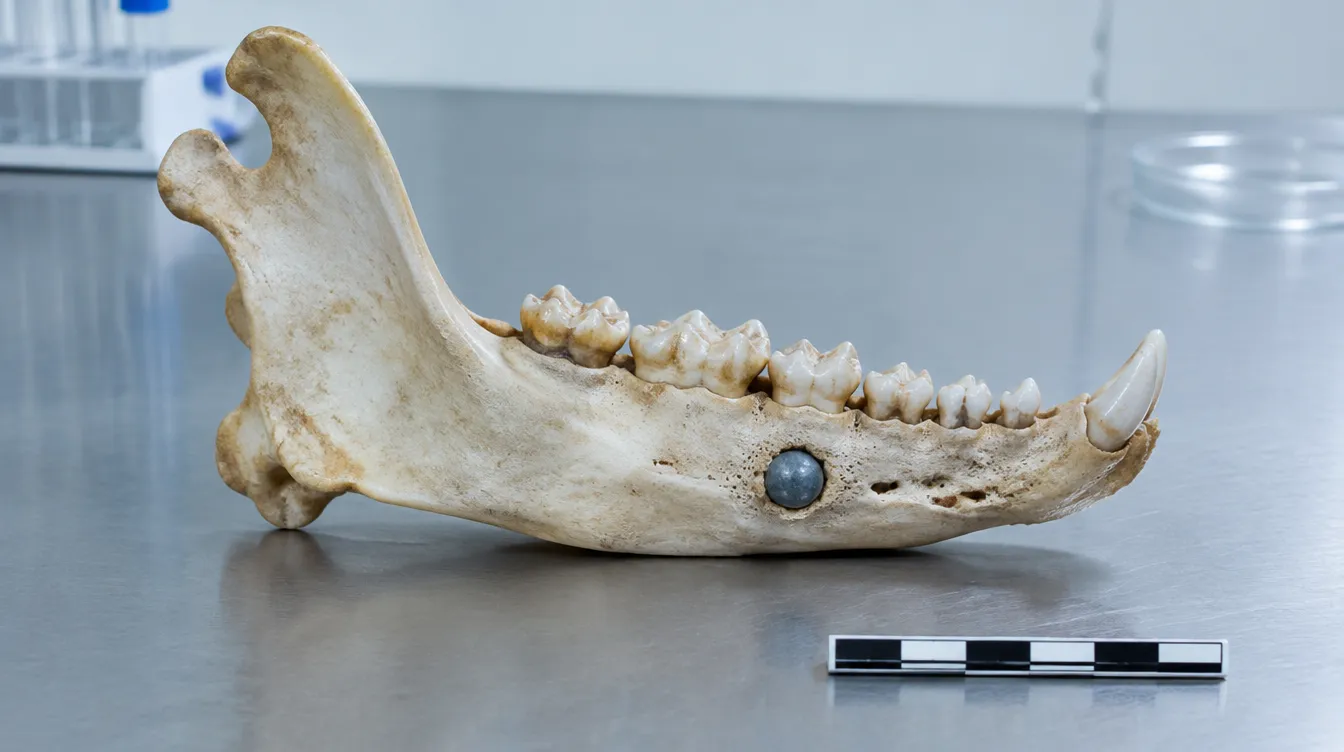
Hatteras Island — which is Croatoan, the place the post actually named. Work there with the local community has recovered a sword hilt, gun parts, a lace tag, a writing slate, and square post holes of a kind the Algonquians did not build. In 2025 the team reported large amounts of hammer scale, the flakes that come off iron when a smith works it, in the same layers as sixteenth-century material. In 2026 they reported a musket ball embedded in the jaw of a deer, with radiocarbon dates in the 1580s. None of this has been published in a peer-reviewed journal either.
The most careful sentence spoken about the deer came from one of the scientists who worked on it: nobody can say who fired it, only that the ammunition would not be in that animal unless a European was on Hatteras Island in the late sixteenth or early seventeenth century.
That is the honest shape of all of it. Metal cannot be carbon-dated. Radiocarbon cannot reliably separate 1587 from 1610. English goods travelled Native trade routes for decades. Neither of the two teams working this problem has published its strongest claims for review, and the two teams disagree with each other.
One thing the evidence does rule out: nobody has ever found the graves.
What is left
Put the possibilities side by side and most of them fall. A Spanish attack — Spain was hunting the colony, but its 1588 search party reported finding nothing, and White found no damage two years later. A hurricane, disease or starvation on the island — White found no wreckage and no bodies, and houses that fall down do not stack themselves into a palisade. Sailing home — they had one small boat, gone when White returned; a hundred and fifteen people could not have fitted in it and none of them were navigators. Killed inland — an English official at Jamestown wrote down a second-hand report twenty years later, which some historians take seriously; it comes through several mouths, in a colony with a political interest in the story, and no massacre site has ever been found.
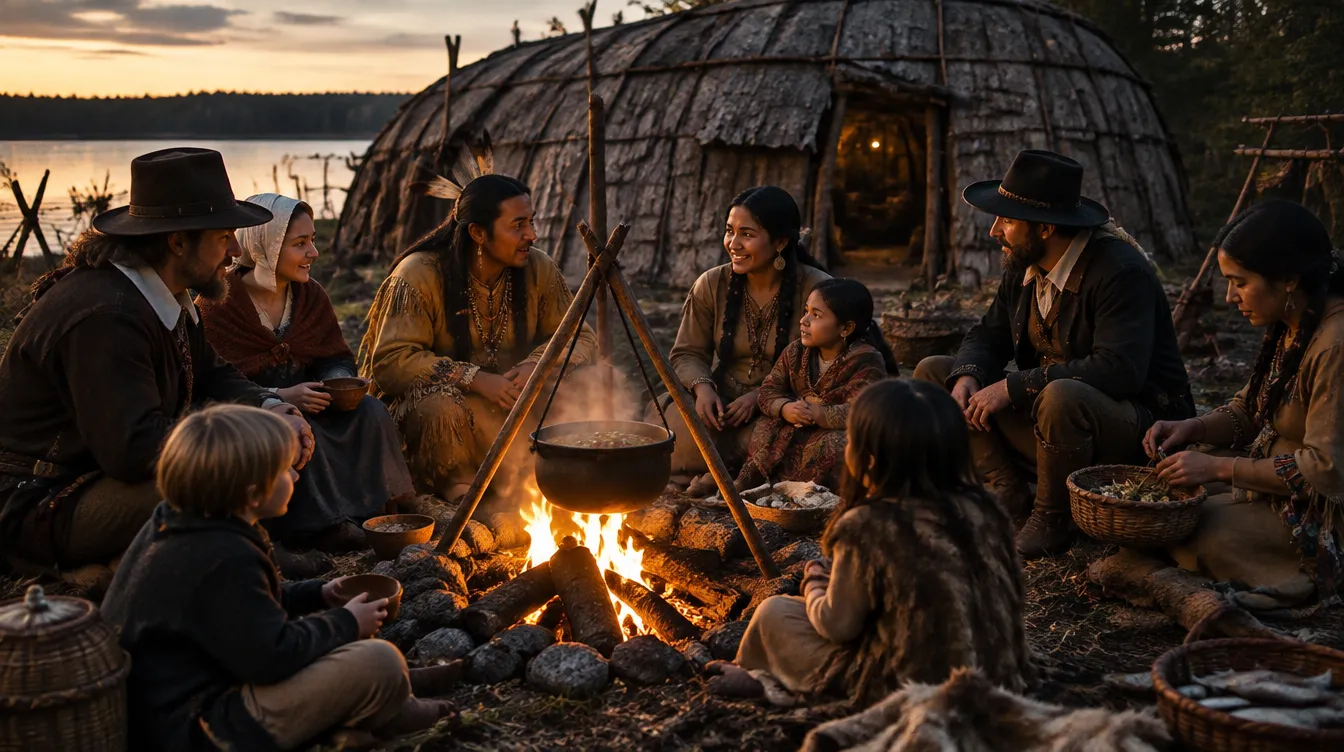
What remains is the least dramatic answer, and the one the evidence actually supports. They took their houses apart, which takes days. They built a wall, which takes longer. They carved where they were going and did not carve the sign for danger. Then they went — most likely not as one column but in groups — to the people who had fed them, sheltered them, and been attacked by them by mistake.
Which leaves the real question. If that is what happened, why was it ever called a disappearance? Because for most of four centuries the people writing the story would accept almost any explanation — a massacre, a hurricane, a curse — before they would accept that English colonists walked into Algonquian towns and became part of them. The families on those islands and rivers have been saying so for four hundred years.
There is a companion book for this episode — the whole account, $6.99.
Key facts
- Settlers
- About 115
- Landed
- 22 July 1587, Roanoke Island
- Last seen
- 27 August 1587
- Governor returned
- 18 August 1590
- Carved on the post
- CROATOAN — and no cross
- Graves found
- None
Chapters
- 0:00One word on a post
- 0:34What John White found
- 1:48A queen's paper
- 3:18The garrison
- 5:57The families
- 8:50The governor sails
- 10:06Three years
- 11:36The return
- 14:26What the ground says
- 17:45Why a disappearance
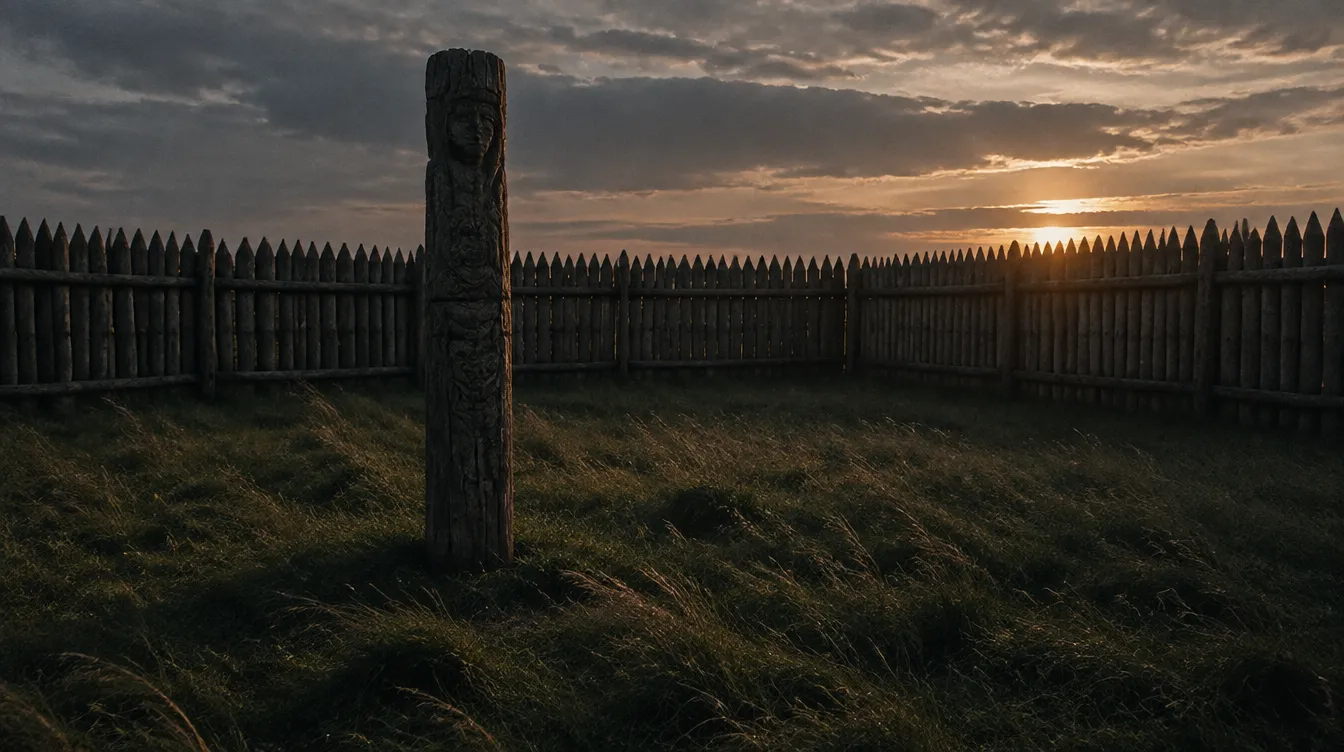
AI-generated reconstruction, not an archival photograph.
Timeline
- 25 March 1584Elizabeth I grants Walter Raleigh a licence to occupy lands in the New World that no Christian prince already holds.
- Summer 1584Two scouting ships return with a glowing report, and with two Algonquian men: Manteo, from Croatoan, and Wanchese, from Roanoke.
- April 1585A fleet under Sir Richard Grenville leaves Plymouth carrying about six hundred soldiers and seamen.
- 29 June 1585The flagship Tiger runs aground crossing the bar. Seawater ruins most of the food for the year before anyone has landed.
- August 1585Grenville sails home, leaving about 107 men under Ralph Lane, who must be fed by the people already living there.
- 1 June 1586Lane attacks the Roanoke weroance Pemisapan, who is shot and killed. Days later Francis Drake arrives and Lane abandons the colony.
- Late 1586Grenville arrives to find nobody there. He leaves fifteen men to hold the place and sails away. They are never accounted for.
- May 1587About 115 settlers sail under Governor John White — roughly seventeen women and at least nine children. Their destination is the Chesapeake, not Roanoke.
- 22 July 1587The pilot Simon Fernandes refuses to carry them further north. They are put ashore on Roanoke Island. Of Grenville's fifteen men they find only the bones of one.
- 28 July 1587George Howe is killed alone in the shallows gathering crabs. The colonists strike back at night and attack Croatoan — Manteo's own people, their only allies.
- 13 August 1587Manteo is baptised, the first Church of England baptism of a Native American, and made lord of Roanoke by Raleigh's order.
- 18 August 1587White's daughter Eleanor gives birth to Virginia Dare, the first English child born in the Americas.
- 27 August 1587White sails for England at the colonists' written request, having agreed the signal: carve where you go, and a cross above it if you go in danger.
- Spring 1588The Privy Council holds every seaworthy ship for the defence of the realm against the Spanish Armada. White sails anyway with two small pinnaces.
- 6 May 1588French privateers attack off the African coast. White is wounded twice, the supplies are stripped, and the ships crawl back to England.
- March 1590White finally gets passage — as a passenger on a privateering squadron, with no colonists and no supplies.
- 18 August 1590He lands on the day Virginia Dare turns three. The houses are gone, a palisade stands around the cleared ground, and CROATOAN is carved on a post with no cross.
- October 1590A storm drives the ship off before it can reach Croatoan. White is put ashore in England and never crosses the ocean again.
- 1998Tree-ring work published in Science finds that 1587–1589 was the driest three-year stretch in eight hundred years of the regional record.
- 2012A patch glued to White's map is examined. Hidden beneath it is a fort symbol at the head of Albemarle Sound, about fifty miles inland.
- 2015 and 2020Excavations at Site X, and later Site Y, turn up English pottery of the right period within a Native American site — enough for a household, not for a colony.
- 2025–2026Work on Hatteras Island reports hammer scale in sixteenth-century layers, and a musket ball embedded in the jaw of a deer. Neither has been peer reviewed.
The companion book
The video is under twenty minutes. This is the whole account: why England sent the colony at all, what the first garrison did to the people who fed them, why a pilot put 115 settlers on the wrong island, and what John White found when he finally came back. Every piece of evidence from the last fifteen years is here — and so is what each one does not prove.
Roanoke: The Word They Left Behind
The lost colony of 1587, the word they carved, and what four centuries of searching has actually found
68 pages · PDF + EPUB · $6.99
Researched and written with AI assistance. Every fact is checked against the sources listed in the book — the full note.
Questions people ask
What happened to the Roanoke colony?
About 115 settlers were left on Roanoke Island in August 1587. When Governor John White returned three years later the houses had been taken down timber by timber, a palisade had been built around the cleared ground, and the word CROATOAN was carved on a post — the agreed signal for where they had gone. There was no cross above it, which was the agreed signal for danger. No bodies, no graves and no wreckage were found. A storm drove White's ship off before he could sail to Croatoan, and he never returned.
What does CROATOAN mean, and why does the missing cross matter?
Croatoan was the island community of Manteo, about fifty miles south of Roanoke — today's Hatteras Island. Before sailing, White and the colonists agreed they would carve the name of the place they moved to, and add a cross above it if they left in distress. White recorded finding the word carved in fair capital letters, "without any crosse or signe of distresse". Read as agreed, the post says they moved deliberately, and were not in danger when they went.
Has the Lost Colony been found?
No finding has been confirmed through peer review. Excavations at Site X and Site Y, inland at the head of Albemarle Sound, produced English pottery of the right period inside a Native American site — enough for a household rather than a colony, and the foundation that dug it said for years that there was no fort, no buildings and no graves. In June 2026 that foundation announced the two sites together were where the colonists settled, but that announcement is a press statement, not a peer-reviewed paper, and no independent team has assessed it.
What did the Hatteras Island excavations find?
Work on Hatteras with the local community has recovered a sword hilt, gun parts, a lace tag, a writing slate and square post holes of a kind the Algonquians did not build. In 2025 the team reported large amounts of hammer scale — the flakes that come off iron when a smith works it — in layers with sixteenth-century material, and in 2026 a musket ball embedded in a deer's jaw with radiocarbon dates in the 1580s. None of this has been published in a peer-reviewed journal. One of the scientists put the limit plainly: nobody can say who fired it, only that ammunition would not be in that deer unless a European was on the island in the late sixteenth or early seventeenth century.
Did drought destroy the colony?
It cannot be said to have destroyed anything. A 1998 study in Science reconstructed rainfall from the growth rings of very old bald cypress trees and found that 1587 to 1589 was the driest three-year stretch in an eight-hundred-year record. The trees are in the wider region rather than on Roanoke itself, and the finding describes the conditions, not the outcome: the years the colonists were left alone were the worst possible years to depend on somebody else's harvest.
Who was Virginia Dare?
She was John White's granddaughter, born on Roanoke Island on 18 August 1587 to his daughter Eleanor — the first English child born in the Americas. Her grandfather sailed for England nine days later and never saw her again. He landed back on the island on 18 August 1590, the day she turned three.
Sources
Primary records
- John White's narratives of the 1587 and 1590 voyages
Richard Hakluyt (printer) · 1598–1600 · The Principal Navigations
- Account of the 1585–86 colony
Ralph Lane · 1589 · Printed in Hakluyt
- Report of the 1584 reconnaissance voyage
Arthur Barlowe · 1584 · Printed in Hakluyt
- A Briefe and True Report of the New Found Land of Virginia
Thomas Harriot · 1588
Books
- Becoming the Lost Colony
Charles Ewen and Kathleen Shields · 2024
Institutions and archives
- John White's watercolours and the map La Virginea Pars
British Museum
- Fort Raleigh National Historic Site
National Park Service
- Site X (2015), Site Y (2020) and the June 2026 announcement
First Colony Foundation — the 2026 announcement is a press statement, not peer reviewed
Papers
- The Lost Colony and Jamestown Droughts
Stahle et al. · 1998 · Science, 24 April 1998
- Hatteras Island excavations
Horton, Dawson and Scaffidi · 2009–2026 · Not yet published in a peer-reviewed journal
Books we recommend
Every book listed is one we actually used. These are not affiliate links.
- Becoming the Lost Colony
Charles Ewen and Kathleen Shields
- A Kingdom Strange: The Brief and Tragic History of the Lost Colony of Roanoke
James Horn