Franklin's Lost Expedition
Episode 1 · 1845–1859 · King William Island, Canadian Arctic · 17 min 30 s
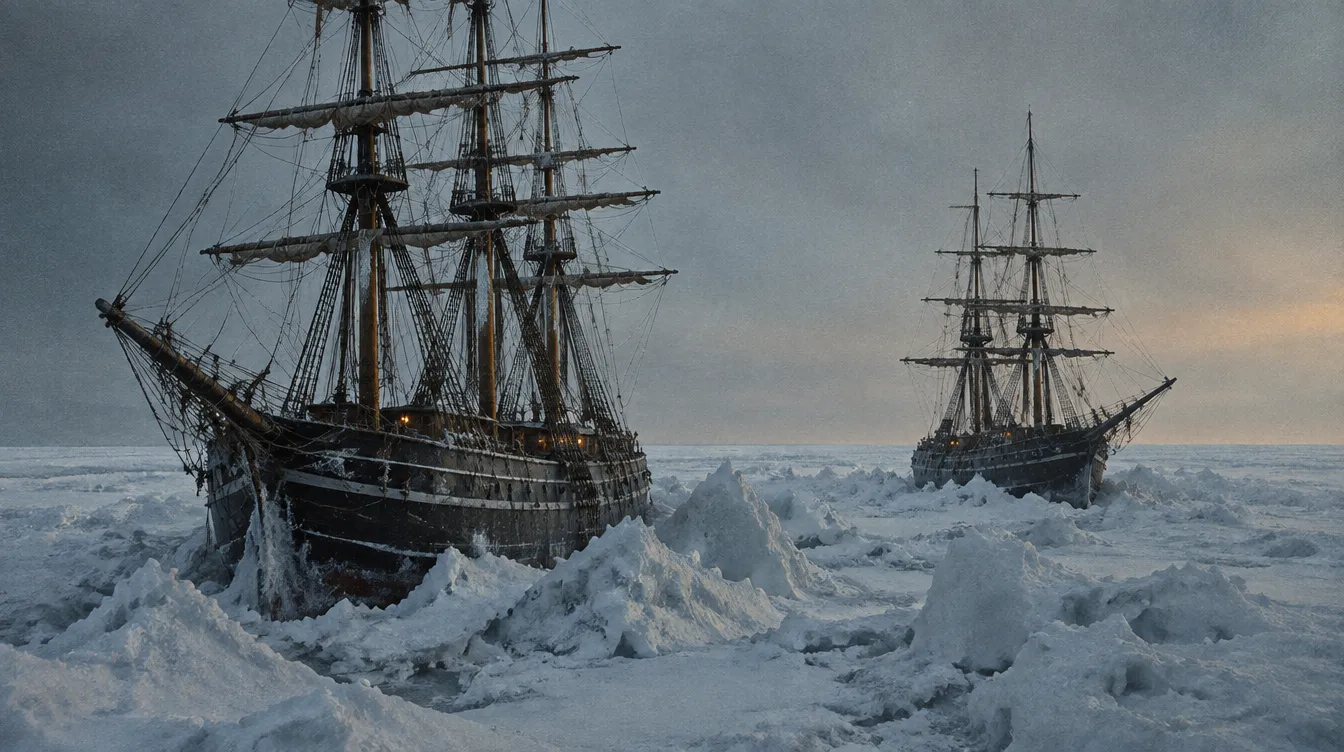
Episode 1 · 17 min 30 s · Published 20 September 2026
AI-generated reconstruction, not an archival photograph.
Get the free field guide to this episode
16 pages: the full timeline, the maps, the cast, and every source, so you can check any of it yourself. Free, and yours to keep whether or not you ever buy anything.
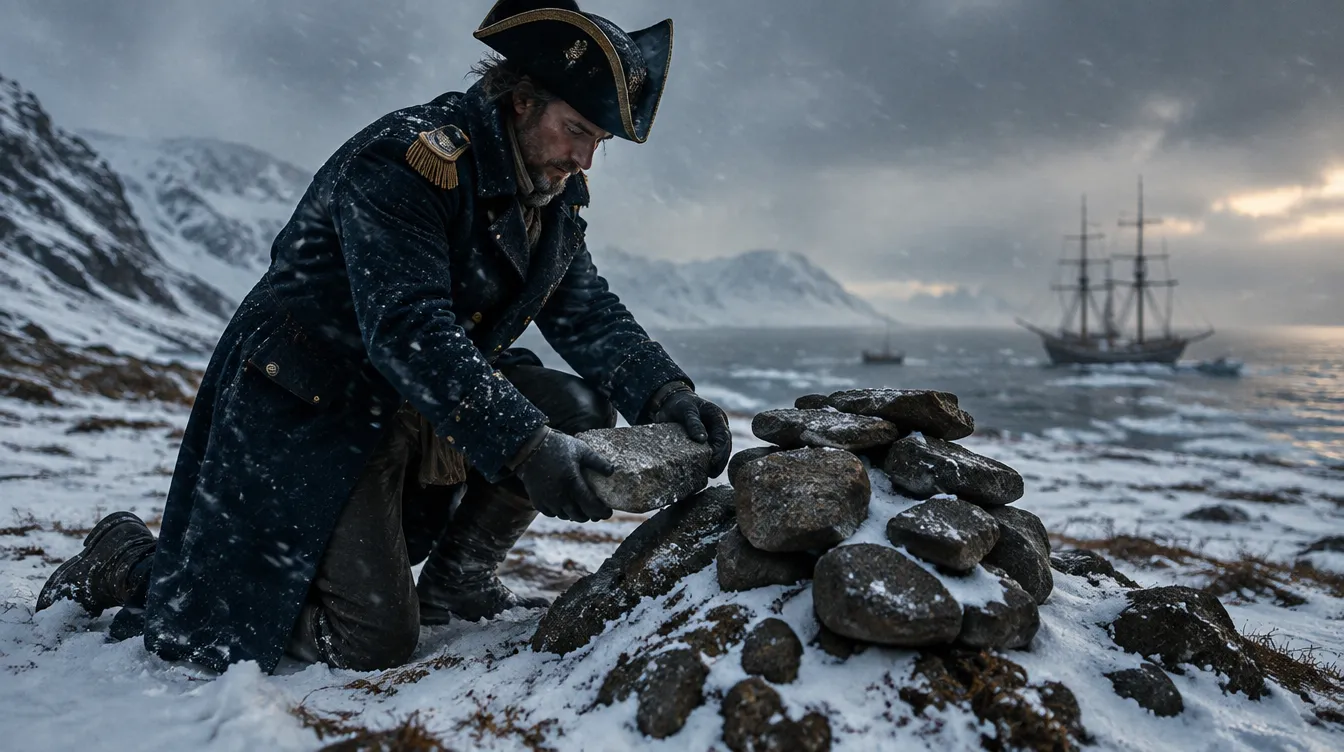
In May 1859, on the northwest coast of King William Island, a British naval officer named William Hobson pulled apart a pile of stones. Inside, sealed in a metal cylinder, was a single sheet of paper — a standard Royal Navy record form, the kind sailors threw overboard in bottles to track ocean currents.
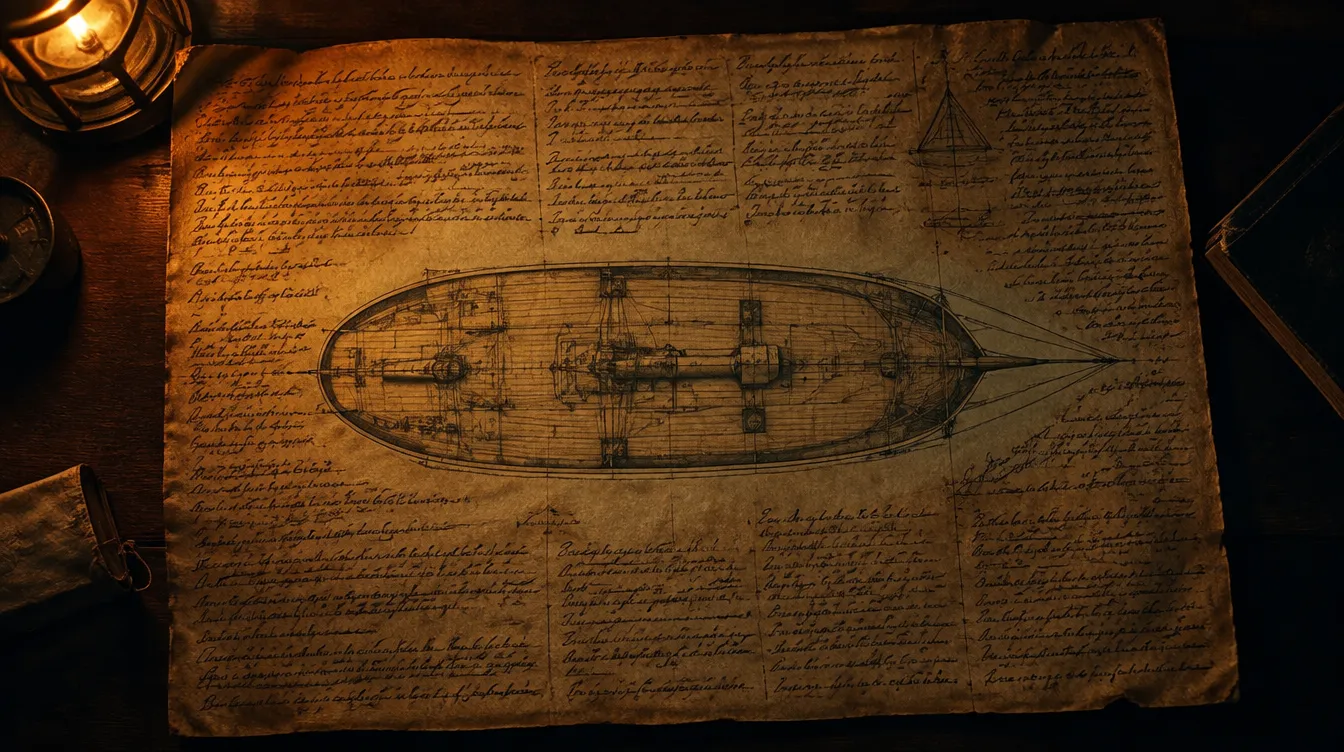
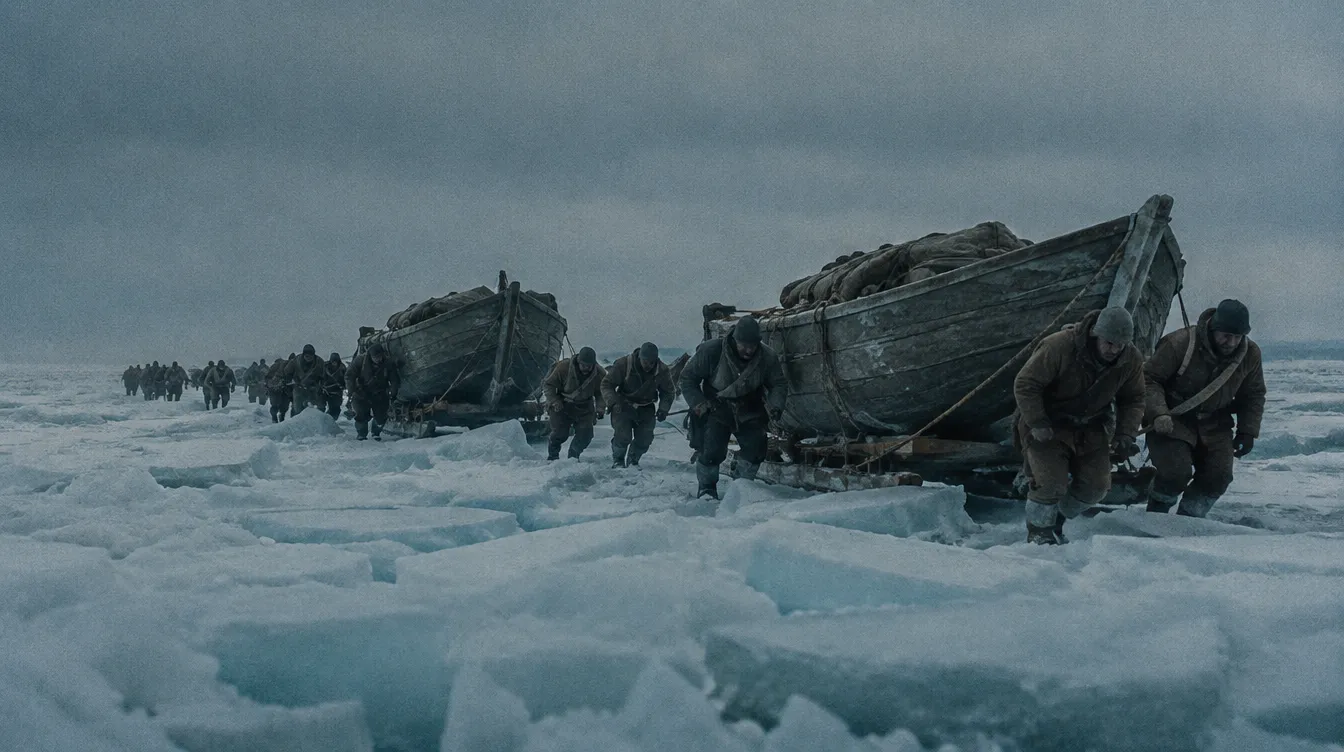
It had been written on twice, a year apart. The first message, from May 1847, ended with two words: All well. The second was crowded into the margins around it in April 1848. The ships had been abandoned. Sir John Franklin was dead. Twenty-four men were gone, and the one hundred and five who were left were setting out on foot toward a river hundreds of miles to the south.
None of them were ever seen alive again by another European.
This episode follows the expedition from the day it left the Thames to the DNA laboratory that is now, one name at a time, identifying the dead — including the officer whose handwriting fills those margins.
There is a companion book for this episode — the whole account, $6.99.
Key facts
- Ships
- HMS Erebus · HMS Terror
- Sailed
- 19 May 1845, Greenhithe
- Crew
- 129 men
- Beset in ice
- 12 September 1846
- Ships abandoned
- 22 April 1848
- Survivors found
- None
Chapters
- 0:00The note in the cairn
- 1:01Two ships leave England
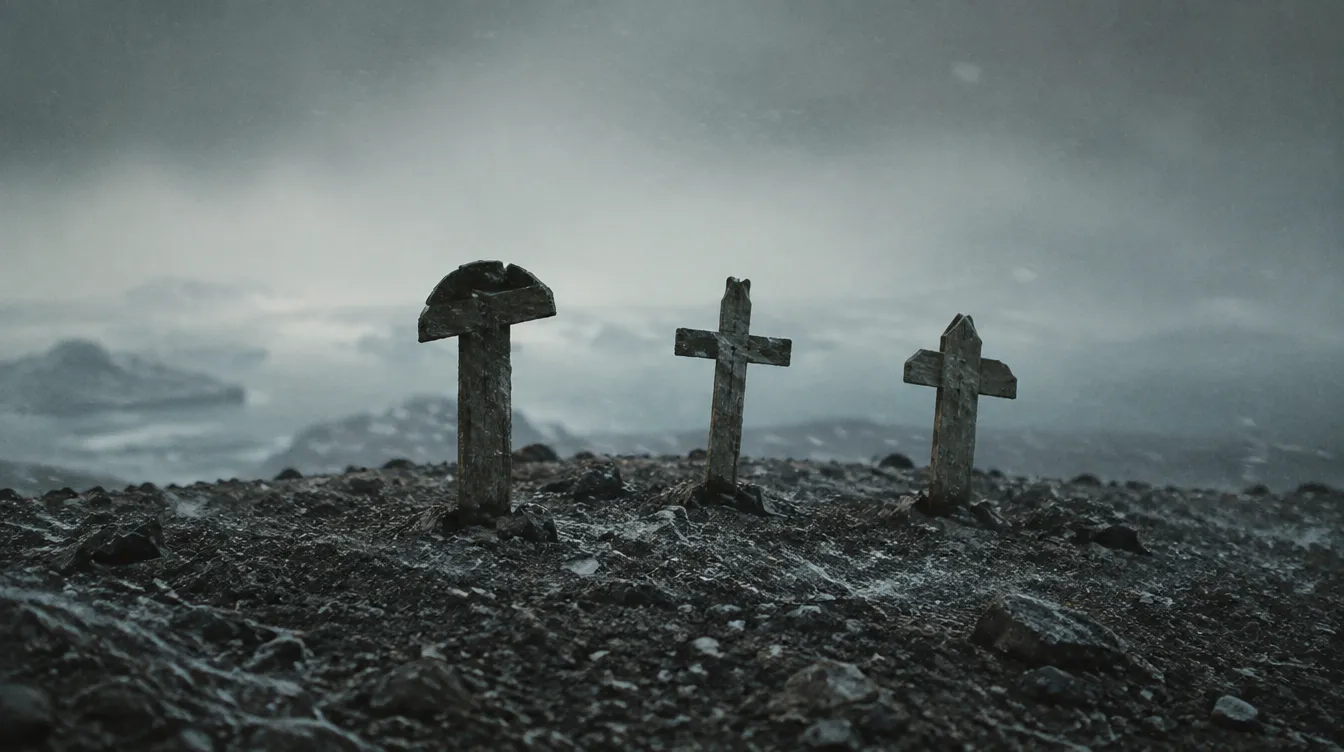
- 3:32Beechey Island and three graves
- 5:39Trapped
- 7:39The margins of the note
- 9:44What they left behind
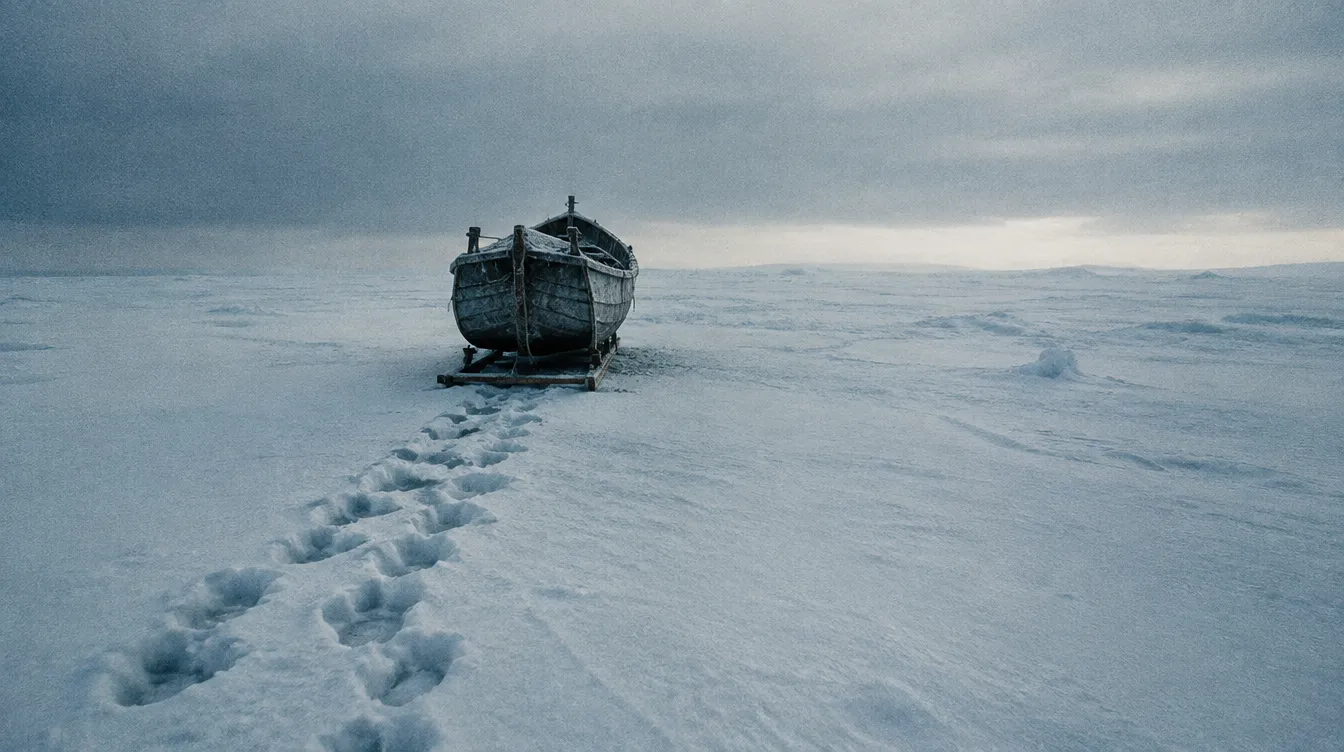
- 11:09John Rae and the truth nobody wanted
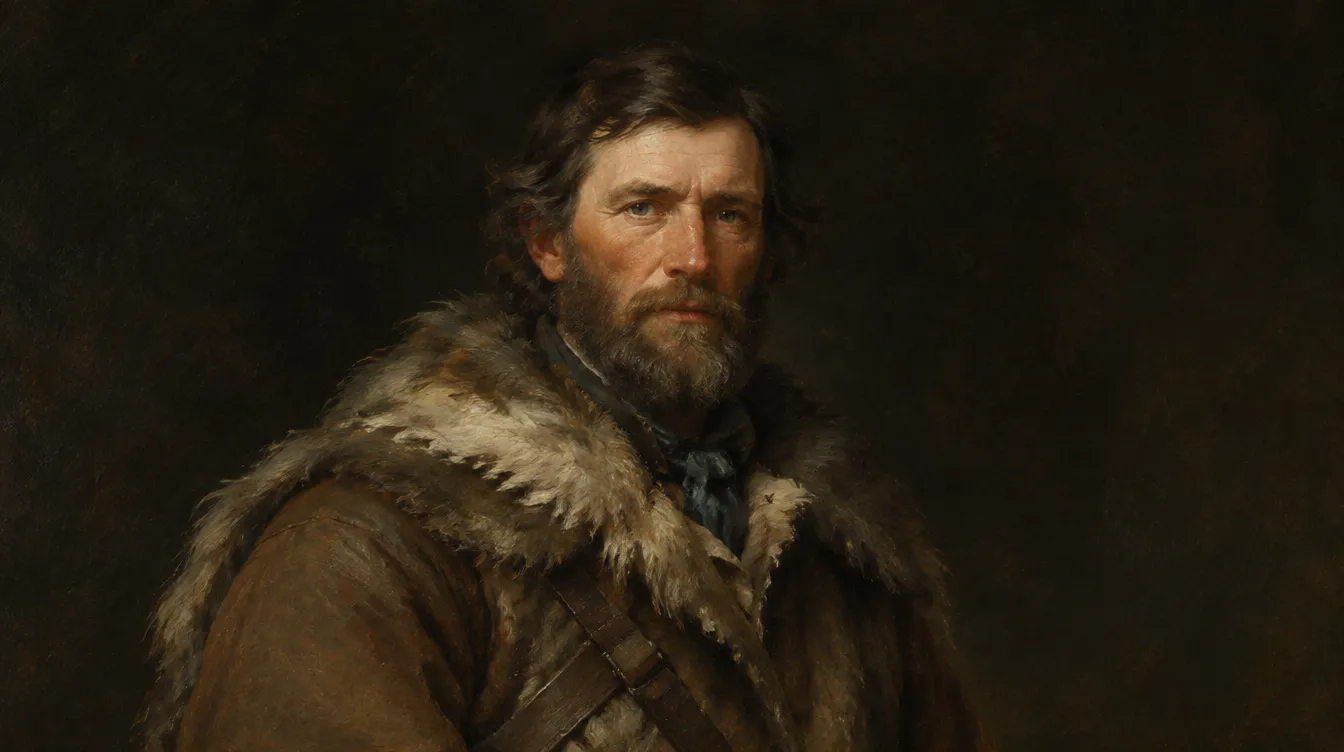
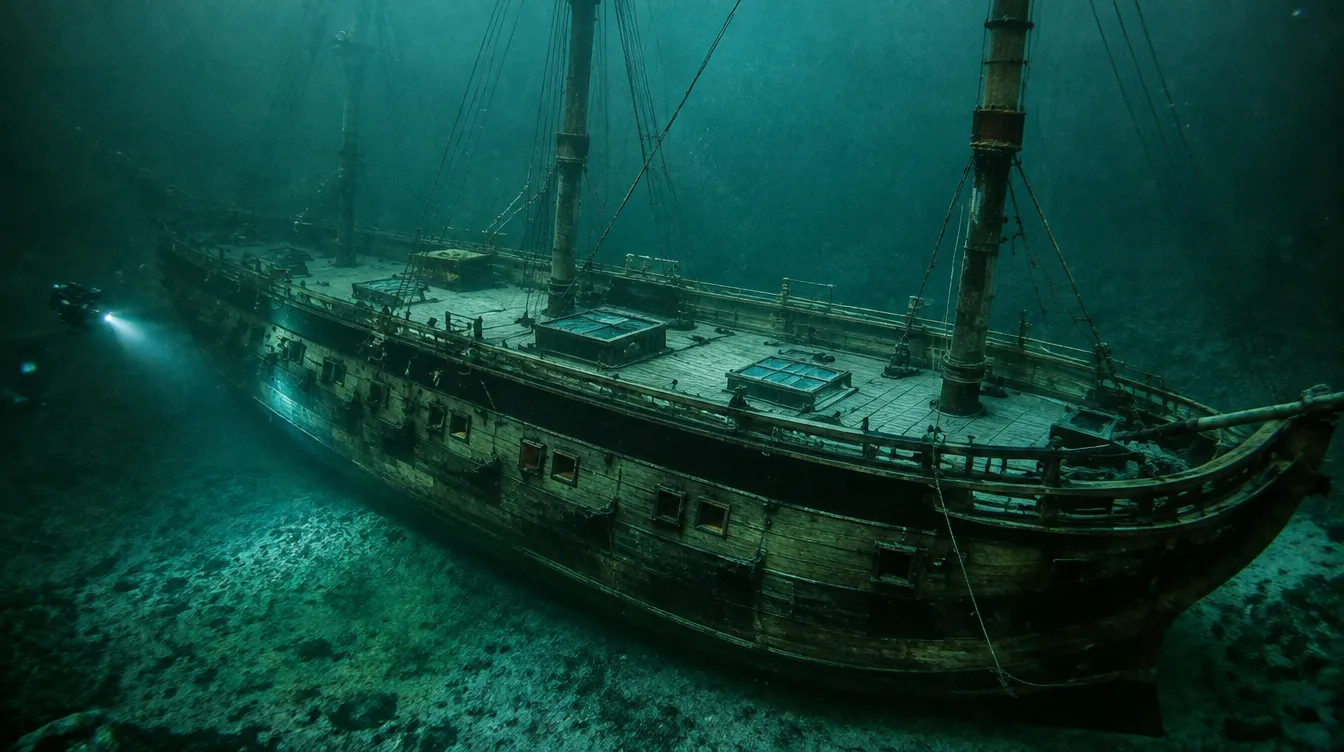
- 13:05Finding Erebus and Terror
- 14:52The names return

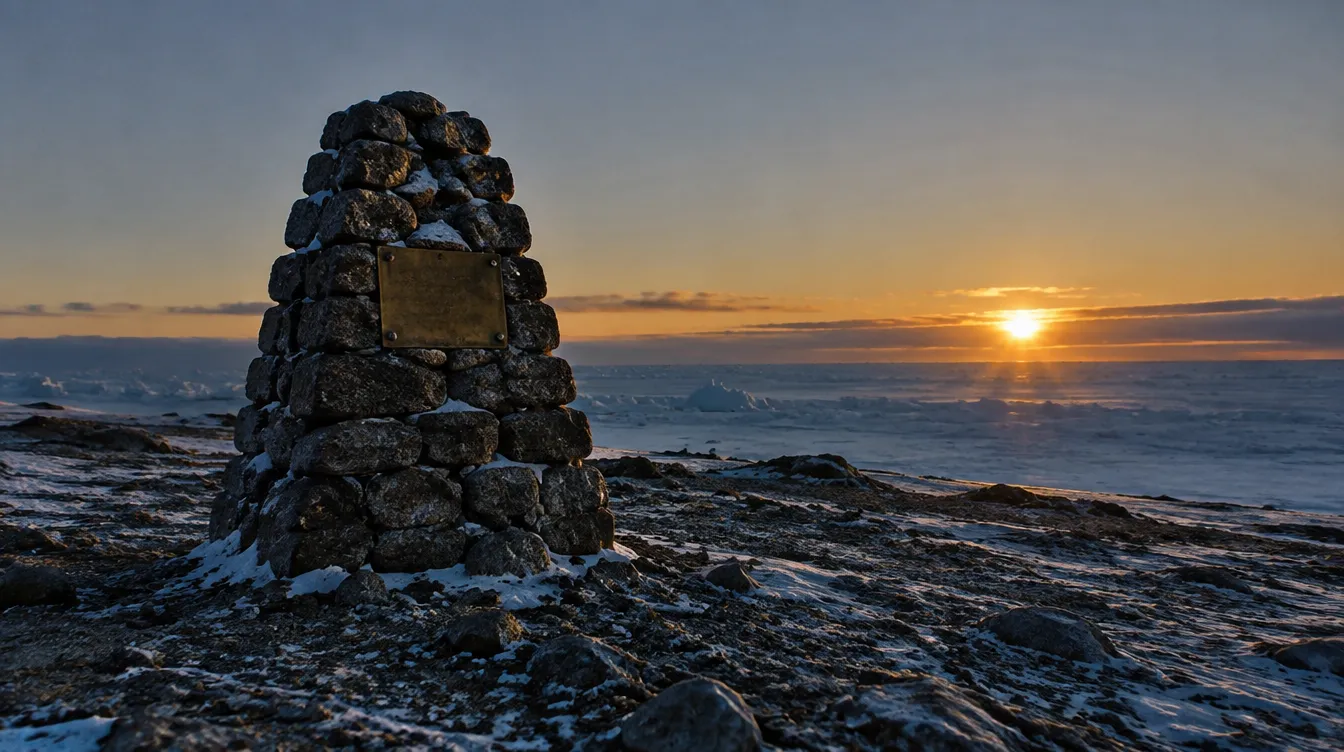
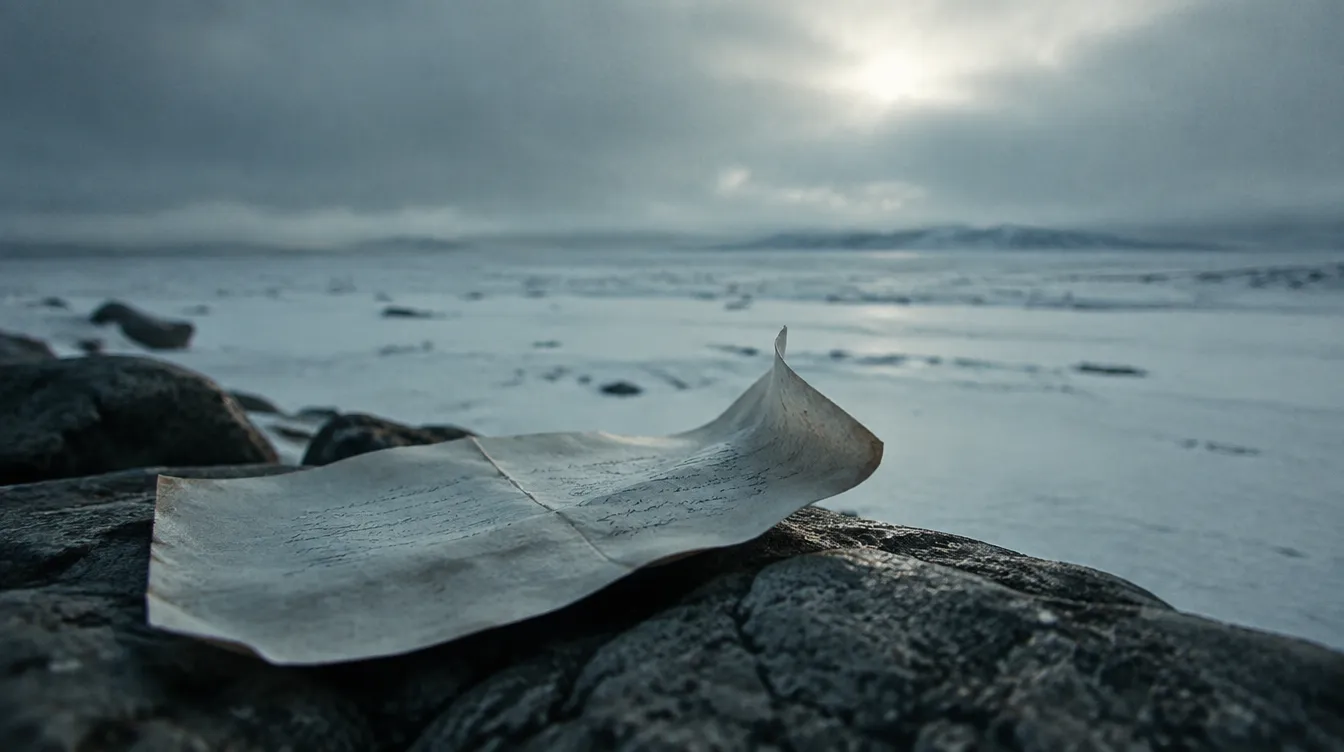
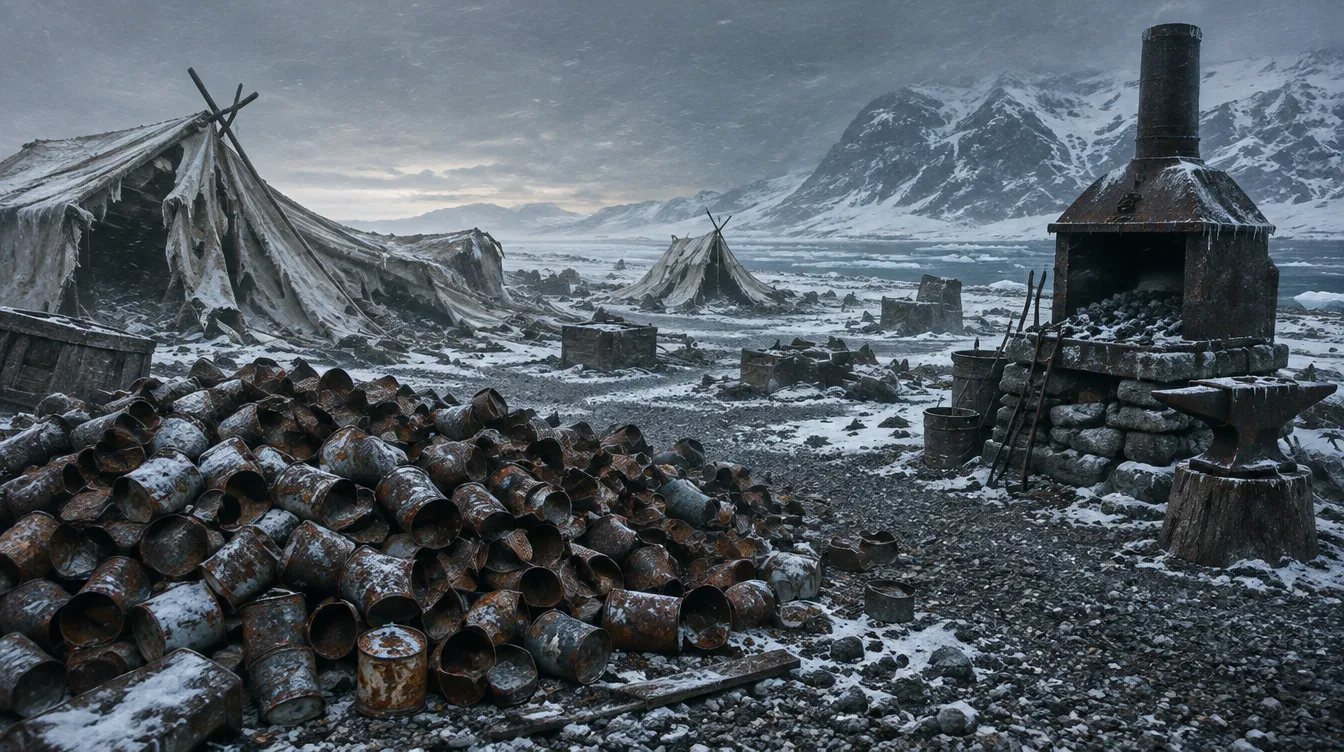
AI-generated reconstruction, not an archival photograph.
Timeline
- 19 May 1845Erebus and Terror sail from Greenhithe on the Thames.
- Late July 1845Two whaling ships meet them in Baffin Bay. The last Europeans to see the expedition alive.
- Winter 1845–46The expedition winters at Beechey Island. John Torrington, John Hartnell and William Braine die and are buried there.
- 12 September 1846Erebus and Terror are beset in the ice off the northwest corner of King William Island. They never move under their own power again.
- May 1847A party under Lieutenant Graham Gore builds a cairn at Victory Point and leaves a record ending with the words 'All well.'
- 11 June 1847Sir John Franklin dies aboard Erebus. The cause and burial place are unknown.
- 22 April 1848The ships are deserted, five leagues from Victory Point.
- 25 April 1848Fitzjames and Crozier add a second message around the margins of the 1847 record: 24 dead, 105 survivors.
- 26 April 1848The survivors set out on foot for Back's Fish River.
- 1850Search parties find the Beechey Island winter camp and the three graves.
- 1854John Rae reports Inuit accounts of the dead, and of cannibalism. Britain turns on him.
- May 1859Lieutenant William Hobson recovers the Victory Point record from a cairn on King William Island.
- 1984–1986Owen Beattie's team exhumes the three Beechey Island sailors and finds tuberculosis, pneumonia and very high lead levels.
- September 2014A Parks Canada team finds HMS Erebus in 11 metres of water in Wilmot and Crampton Bay, guided by Inuit oral history.
- September 2016HMS Terror is found in 24 metres of water in Terror Bay, hatches closed and windows intact.
- 2021DNA identifies John Gregory, an engineer on Erebus, through a descendant in South Africa.
- 2024DNA identifies Captain James Fitzjames, whose handwriting fills the margins of the Victory Point record.
The companion book
The video is seventeen minutes. This is the whole thing. Every date, every name, every object the searchers found and what it proves — and what it does not. The six explanations for what killed them, each one weighed and ranked. The questions still open. And the full source list, so you can check any of it yourself.
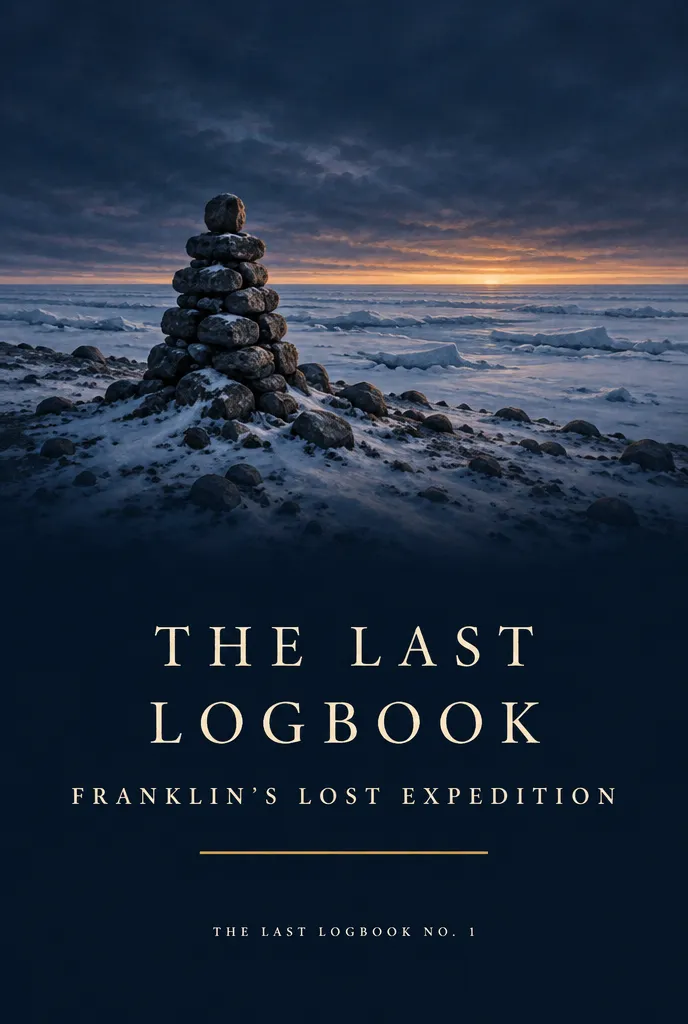
The Last Logbook: Franklin's Lost Expedition
How 129 men vanished in the Arctic, and how DNA began giving them their names back
75 pages · PDF + EPUB · $6.99
Researched and written with AI assistance. Every fact is checked against the sources listed in the book — the full note.
Questions people ask
What happened to the Franklin expedition?
HMS Erebus and HMS Terror sailed from Greenhithe on 19 May 1845 to find the Northwest Passage with 129 men aboard. They were beset in the ice off King William Island on 12 September 1846 and never moved under their own power again. Sir John Franklin died on 11 June 1847. The ships were deserted on 22 April 1848 and the 105 survivors set out on foot for Back's Fish River. None were seen alive again by another European.
What did the Victory Point note say?
It is a single Royal Navy record form, written on twice a year apart. The first message, left in May 1847 by a party under Lieutenant Graham Gore, ends with the words "All well." The second was crowded into the margins in April 1848 by Fitzjames and Crozier: the ships abandoned, Franklin dead, 24 men lost, and 105 setting out south. Lieutenant William Hobson recovered it from a cairn in May 1859.
Where are HMS Erebus and HMS Terror now?
A Parks Canada team found HMS Erebus in September 2014, in 11 metres of water in Wilmot and Crampton Bay, guided by Inuit oral history. HMS Terror was found in September 2016 in 24 metres of water in Terror Bay, hatches closed and windows intact. Both are protected as a National Historic Site.
What killed the crew of the Franklin expedition?
No single cause is supportable on the evidence. Lead poisoning from tin solder was proposed after Owen Beattie's 1984–86 exhumations, which also found tuberculosis and pneumonia; later isotope work weakened the lead explanation. Scurvy, starvation, cold and exhaustion all contributed. Researchers disagree, and the honest answer is that the men died of several things at once.
Have any of the Franklin expedition crew been identified?
Yes, two so far. DNA identified John Gregory, an engineer aboard Erebus, in 2021, through a descendant in South Africa. In 2024 the same programme identified Captain James Fitzjames — the officer whose handwriting fills the margins of the Victory Point record — from a jawbone bearing cut marks.
Was John Rae right about the Franklin expedition?
Yes. In 1854 Rae reported Inuit accounts of the expedition's final months, including cannibalism among the last survivors. Britain rejected the account and attacked him for repeating it. The cut marks on the jawbone identified as James Fitzjames in 2024 confirmed what Rae had been told, and both wrecks were later found close to where Inuit testimony had always placed them.
Sources
Primary records
- The Victory Point record
1847–1848 · National Maritime Museum, Greenwich
- The Voyage of the 'Fox' in the Arctic Seas
Francis Leopold McClintock · 1859
- Report to the Admiralty on the fate of the Franklin expedition
John Rae · 1854
- The Lost Arctic Voyagers, Household Words
Charles Dickens · 1854
Books
- Frozen in Time: The Fate of the Franklin Expedition
Owen Beattie & John Geiger
Institutions and archives
- Wrecks of HMS Erebus and HMS Terror National Historic Site
Parks Canada
- Franklin expedition collections
National Maritime Museum, Greenwich
- Franklin expedition collections
Canadian Museum of History
Papers
- Identification of John Gregory by DNA analysis
2021 · University of Waterloo / Lakehead University
- Identification of Captain James Fitzjames by DNA analysis
2024 · University of Waterloo / Lakehead University
Books we recommend
Every book listed is one we actually used. These are not affiliate links.
- Frozen in Time: The Fate of the Franklin Expedition
Owen Beattie & John Geiger
- Erebus: The Story of a Ship
Michael Palin