Lost at Sea · Part 1
The Flannan Isles
Episode 3 · 1899–1901 · Eilean Mòr, Flannan Isles, Outer Hebrides · 13 min 20 s
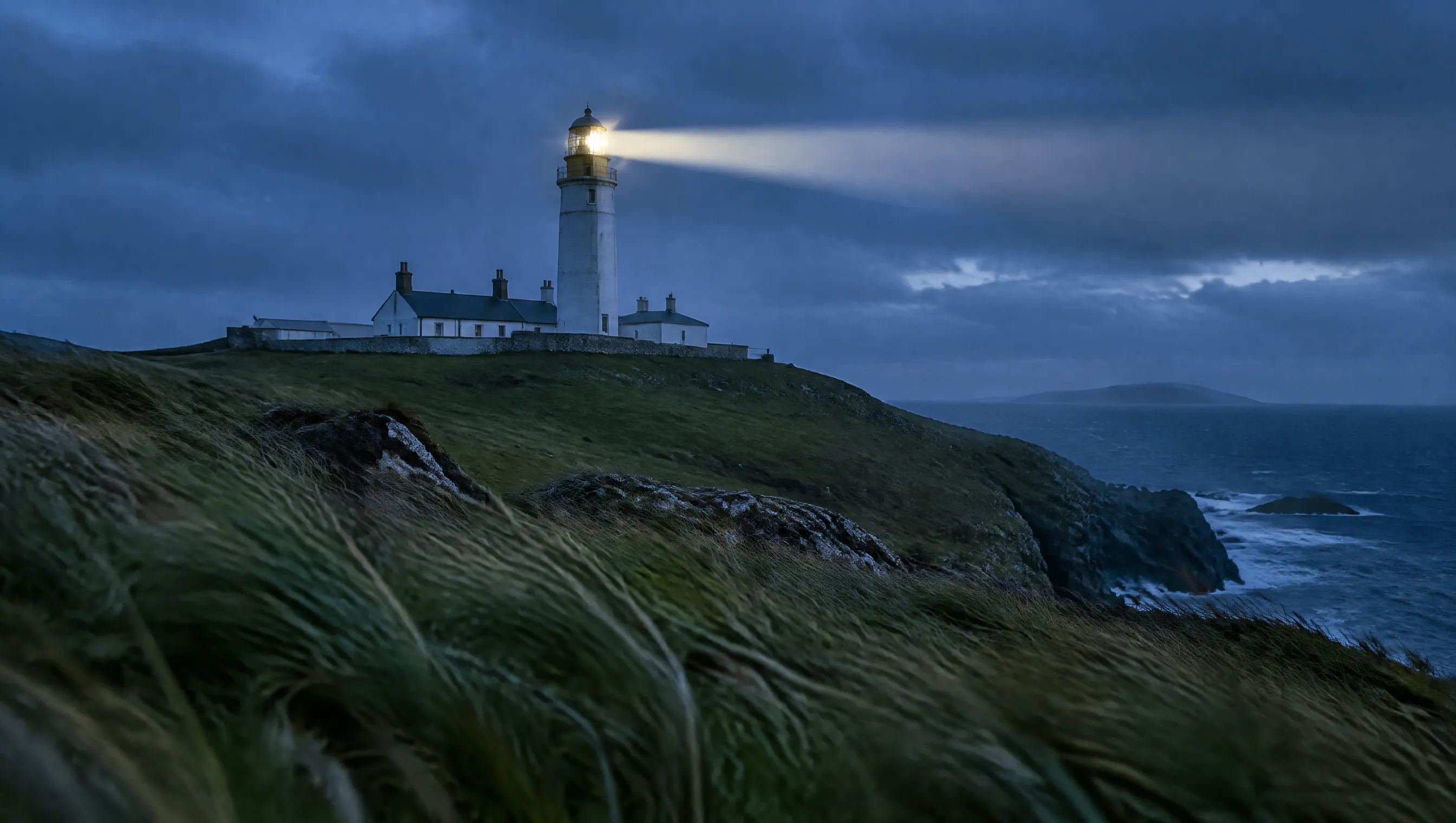
Episode 3 · 13 min 20 s · Published 3 October 2026
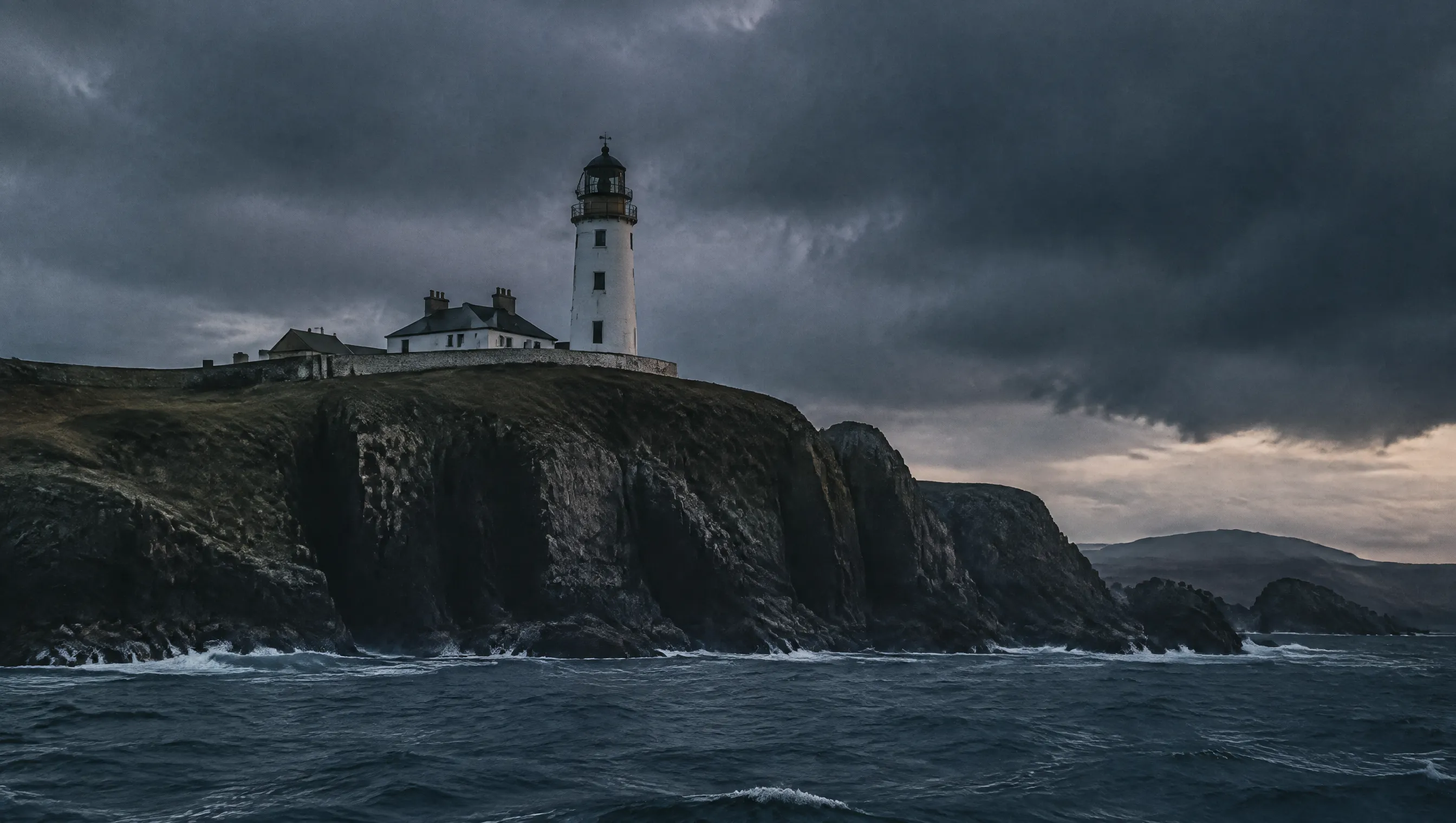
AI-generated reconstruction, not an archival photograph.
Get the free field guide to this episode
16 pages: the full timeline, the maps, the cast, and every source, so you can check any of it yourself. Free, and yours to keep whether or not you ever buy anything.
At about noon on 26 December 1900 the lighthouse tender Hesperus came up to Eilean Mòr, a rock in the Atlantic twenty miles west of Lewis. She was six days late; the weather had held her in harbour. Aboard was Joseph Moore, one of the four keepers of the Flannan Isles light, going back out to start his turn.
Everyone aboard knew what a relief day looked like. A flag on the flagstaff. The empty provision boxes stacked ready on the landing. A keeper coming down the steps to take the ropes.
There was no flag. There were no boxes. Nobody came down. The ship fired a rocket and nothing moved. Captain Jim Harvie’s telegram to Edinburgh that day opens “A dreadful accident has happened at Flannans.” It records what he did when the rocket brought no one out: “as no response was made, managed to land Moore, who went up to the station but found no Keepers there.”
Three men were gone: James Ducat, the principal keeper; Thomas Marshall, the second assistant; and Donald McArthur, an occasional keeper filling in for William Ross, who was on sick leave. None of them was ever found.
What the records actually say
Almost everything people believe about the Flannan Isles was written by people who were never on the island. The documents are shorter, plainer and far more useful.
Moore went up alone. He found the compound gate closed and the main door closed; the kitchen door was open. He looked at the fireplace and “saw that the fire was not lighted for some days.” He went through to where the keepers slept and found “the beds empty just as they left them in the early morning.” Then he stopped: “I did not take time to search further, for I only too well knew that something serious had occurred.”
Men from the ship searched the station and the island with him. There was nobody and no note. In the lightroom, Moore wrote, “The lamp was cleaned. The fountain full. Blinds on the windows.” The morning’s work had been done properly, and then nobody had come back to light the lamp that evening.
Two other things matter. The clocks had stopped, which Harvie read, with the rest, as meaning the accident had happened about a week before. And the kitchen was tidy: “The kitchen utensils were all very clean, which is a sign that it must be after dinner some time they left.” The men had eaten, cleared up, and walked out.
The written logbook stops on 13 December. That is less strange than it sounds — readings were chalked up in rough first and copied into the book afterwards, and a day or two’s lag was normal. The slate held the particulars for the 14th, the hour the lamp was put out on the morning of the 15th, and the barometer, the thermometer and the wind taken at nine o’clock that same morning — the ordinary work of an ordinary morning. That is the last thing any of the three men wrote. There is no storm in it and no distress in it.
The west landing
Superintendent Robert Muirhead reached the island on 29 December. He knew these keepers. He went through the station, then down the cliff to the two landings.
The east landing was in order. The west landing was not.
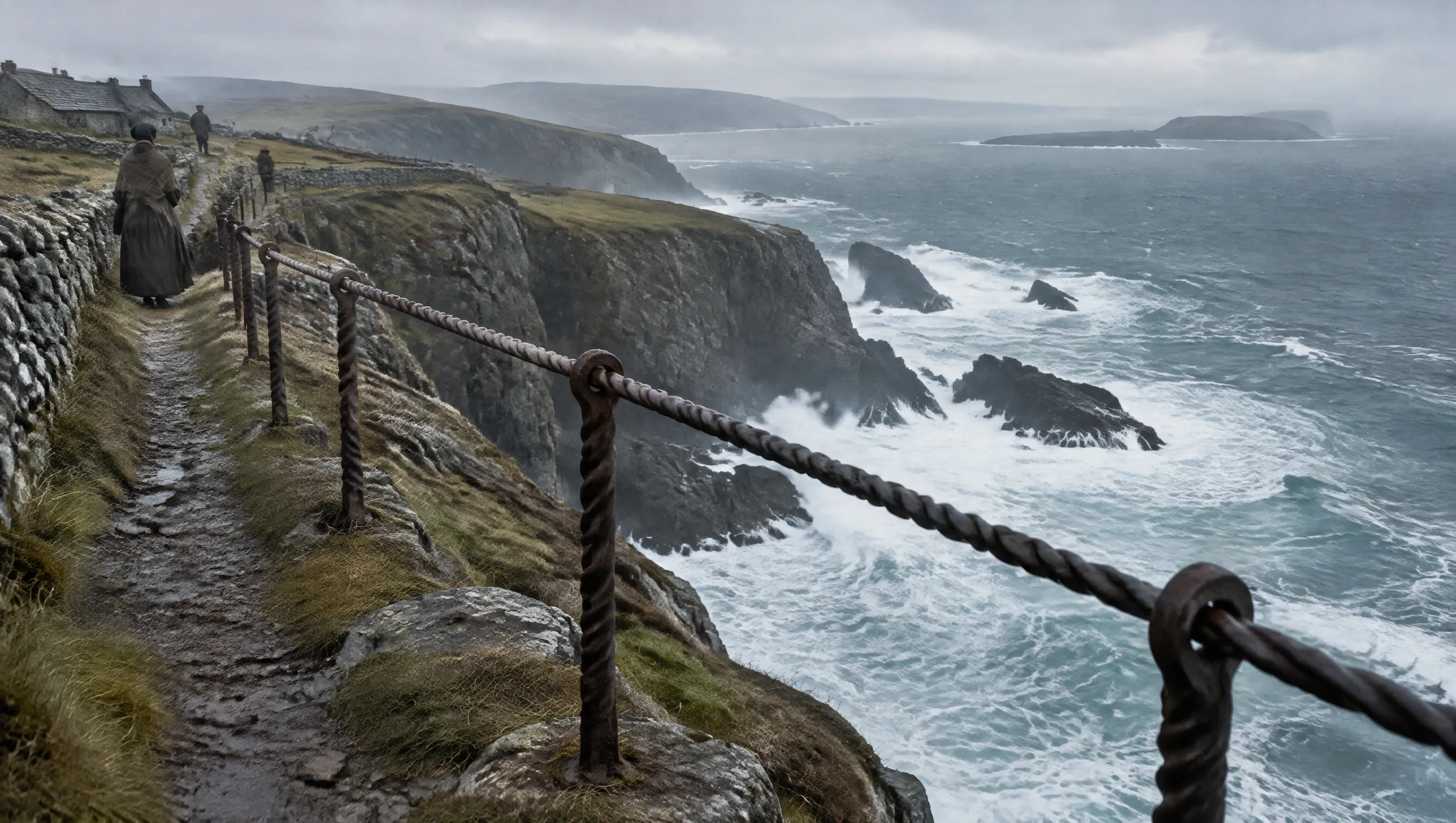
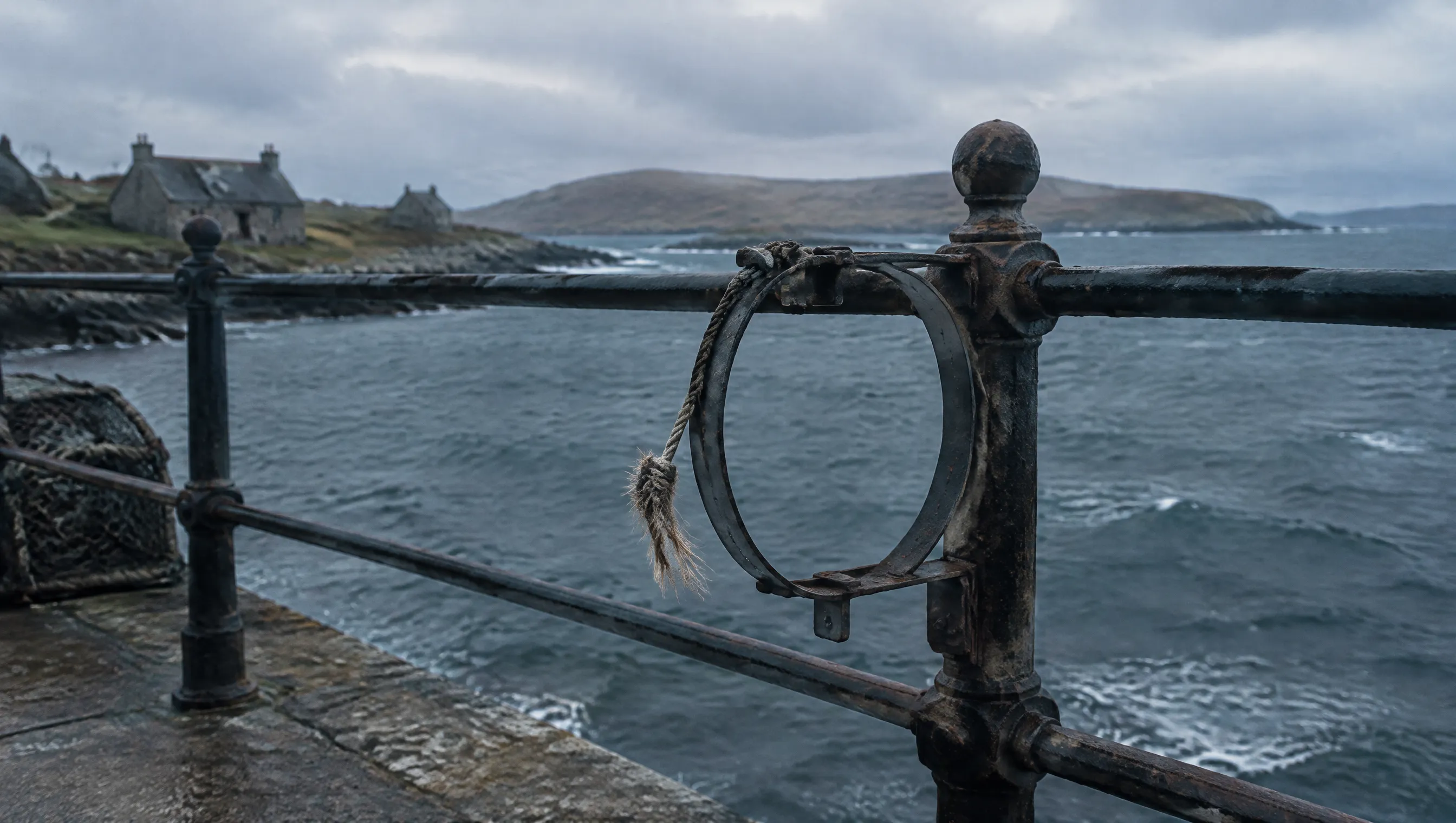
“The iron railings round the crane platform and from the terminus of the tramway to the concrete steps up from the West landing were displaced and twisted.”
“A large block of stone, weighing upwards of 20 cwt, had been dislodged from its position higher up and carried down to and left on the concrete path.”
Twenty hundredweight is over a ton. Higher up again, in a crevice about a hundred and ten feet above the sea, the keepers kept the box holding the mooring ropes and tackle. It had been washed away, and its ropes were “strewn in the crevices of the rocks near the crane platform.”
A lifebuoy fastened to the railings had gone too, and Muirhead looked closely at how. The ropes that held it had not been touched; scraps of canvas were still clinging to them. The sea had torn the buoy off them “even at this great height (110 feet above sea level).”
The west landing sits at the head of a narrow inlet — a geo. Water running into a channel like that cannot spread sideways, so it piles up and climbs. The box was put up there precisely because the sea was not supposed to reach it.
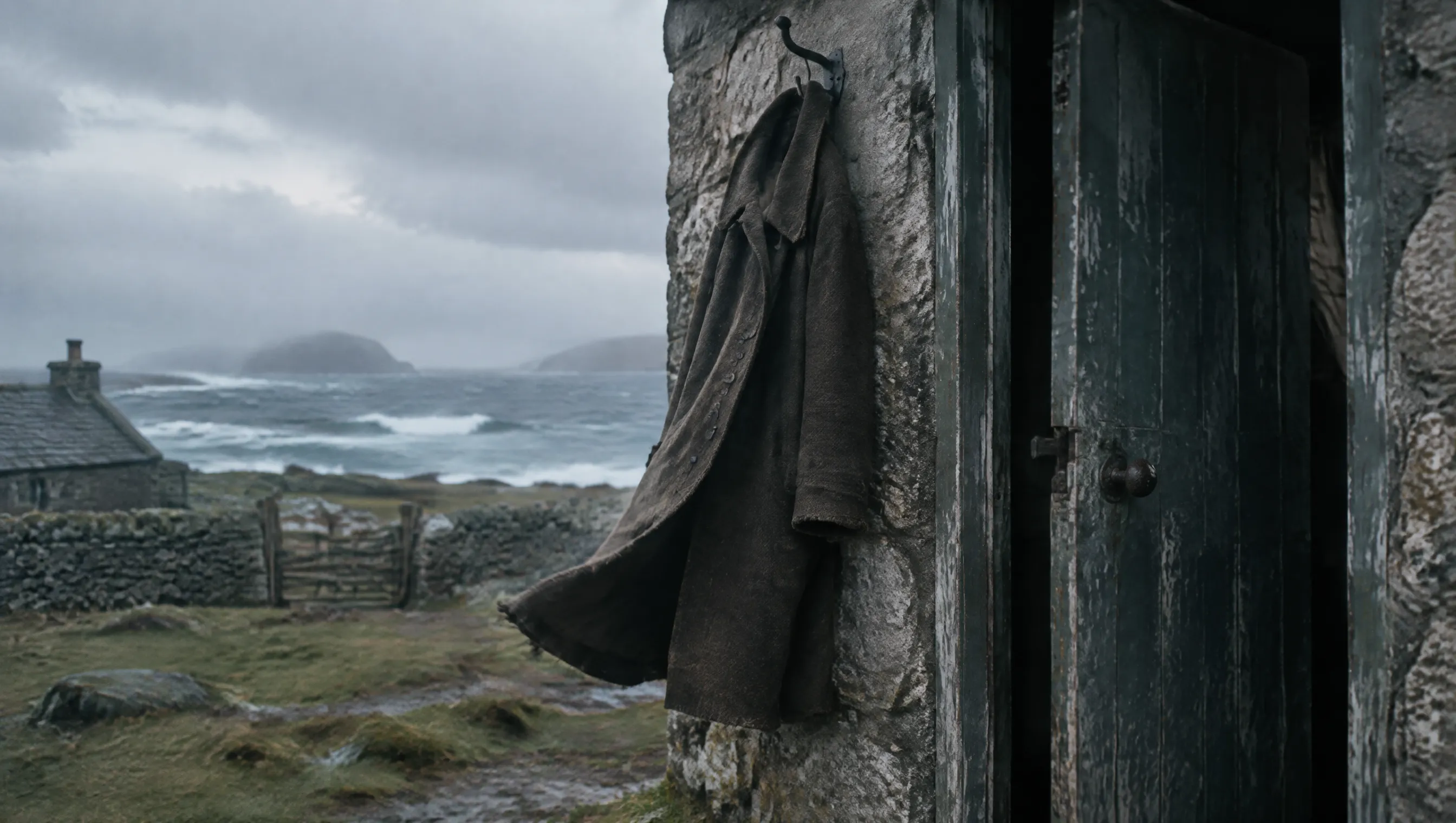
Back in the station Muirhead went through the outdoor clothing with Moore. On a rock like that one, what a man put on told you where he was going. “Ducat was wearing sea boots and a waterproof, and Marshall sea boots and oilskins.” Those are what you wear to work at a landing, close to the water, in weather. McArthur’s coat was left behind. Moore drew the obvious conclusion: “McArthur has his wearing coat left behind him which shows … that he went out in shirt sleeves.”
Muirhead’s report of 8 January 1901 is carefully worded: he calls it “the most likely explanation”, not the answer. The men had gone down on the afternoon of the 15th to secure the box with the mooring ropes, and “an unexpectedly large roller had come up on the Island, and a large body of water going up higher than where they were and coming down upon them had swept them away with resistless force.”
The story you have probably heard
In the familiar version, the logbook records a storm worse than anything in twenty years. Ducat has gone quiet. McArthur is weeping. The men pray. A last entry says the storm is over, the sea is calm, and God is over all. The relief party walks in to find a meal laid and untouched and a chair knocked over.
None of that is in any record.
The meal and the chair come from a poem: Wilfrid Wilson Gibson’s Flannan Isle, published in 1912, twelve years after the event, by a man writing a ballad who never pretended otherwise. The logbook entries are worse, because they look like evidence. Mike Dash went back to the Board’s papers in the 1990s and published what he found in Fortean Studies in 1998: the entries are not there. Nobody knows who first wrote them. What is certain is that no keeper did.
That matters beyond tidiness. Every strange explanation the case has collected — a sea serpent, a ghost ship, foreign agents, three men driven mad on the cliff edge — needs the storm nobody recorded and the fear nobody wrote down. Take the poem and the invented entries away and they have nothing to stand on.
What the evidence does and does not prove
It does not prove when. Muirhead saw the damage on the 29th, fourteen days after the men vanished, and some of it could have been done by later seas. What it proves is that a sea of that size could and did reach those heights at that landing — which is the thing worth knowing.
It does not prove why the third man went out. The coat proves haste, not its reason. The rule was that the light was never left unattended; one man should have stayed inside. Whatever McArthur saw from the tower or the doorway, he judged it mattered more than the rule, and he did not stop to dress for it. Walter Aldebert, who kept this light from 1953 to 1957, believed one man was washed in and the other two taken by the next sea trying to reach him. That fits everything, and it is still an inference.
And it does not prove a storm. The Flannans face three thousand miles of open Atlantic, and a swell raised by distant weather arrives long after the wind that made it. The sea can be deadly there on a quiet afternoon. The real evidence needs no great storm; only the legend does.
What is left is smaller than the legend and sadder. Two men went down to save a box of rope — ordinary work, done many times. A third ran out after them without his coat. In the Board’s register of lightkeepers someone later wrote the same line in red ink against Ducat and Marshall — “Disappeared on or about 15 December 1900” — and in the register of deaths the cause for all three is given as “probably drowning.” McArthur, being an occasional keeper, was not in the register at all.
The light was relit and is still shining. In 1925 Flannan became one of the first Scottish lights to receive messages from the shore by wireless telegraphy; it was automated on 28 September 1971, and no keeper has lived on Eilean Mòr since. In December 2025 plans were approved to restore the keepers’ old shore station at Breasclete on Lewis, with community and interpretation space, an archive and holiday lets — the first place a visitor could stand and look out toward the Seven Hunters with the documented story, rather than the poem, in front of them.
There is a companion book for this episode — the whole account, $6.99.
Key facts
- Lighthouse
- Flannan Isles, on Eilean Mòr
- First lit
- 7 December 1899
- Keepers lost
- James Ducat, Thomas Marshall, Donald McArthur
- Last written log entry
- 13 December 1900
- Station found empty
- 26 December 1900
- Bodies recovered
- None
Chapters
- 0:00Boxing Day, 1900
- 0:31Three secrets
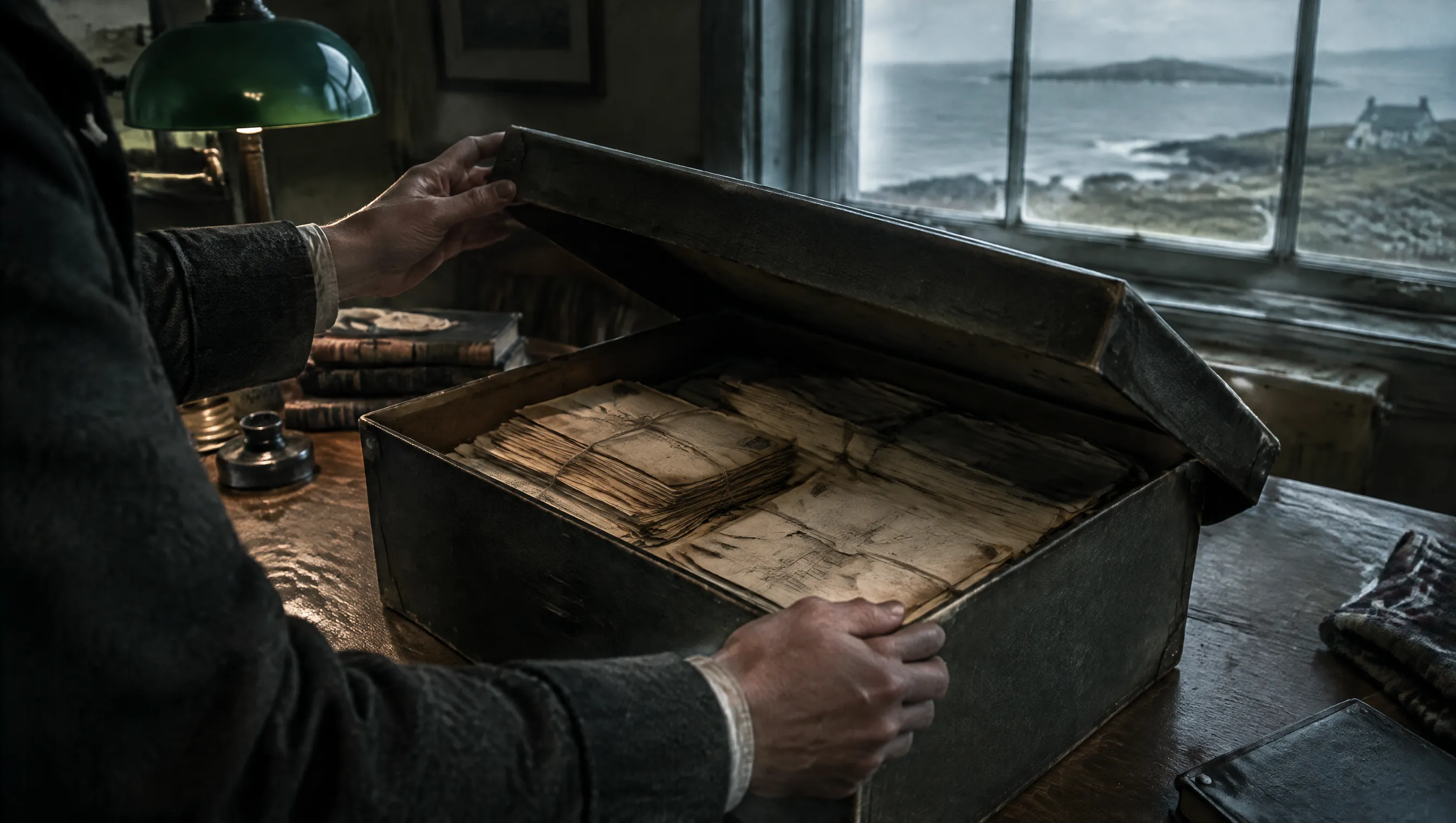
- 1:11The Rock
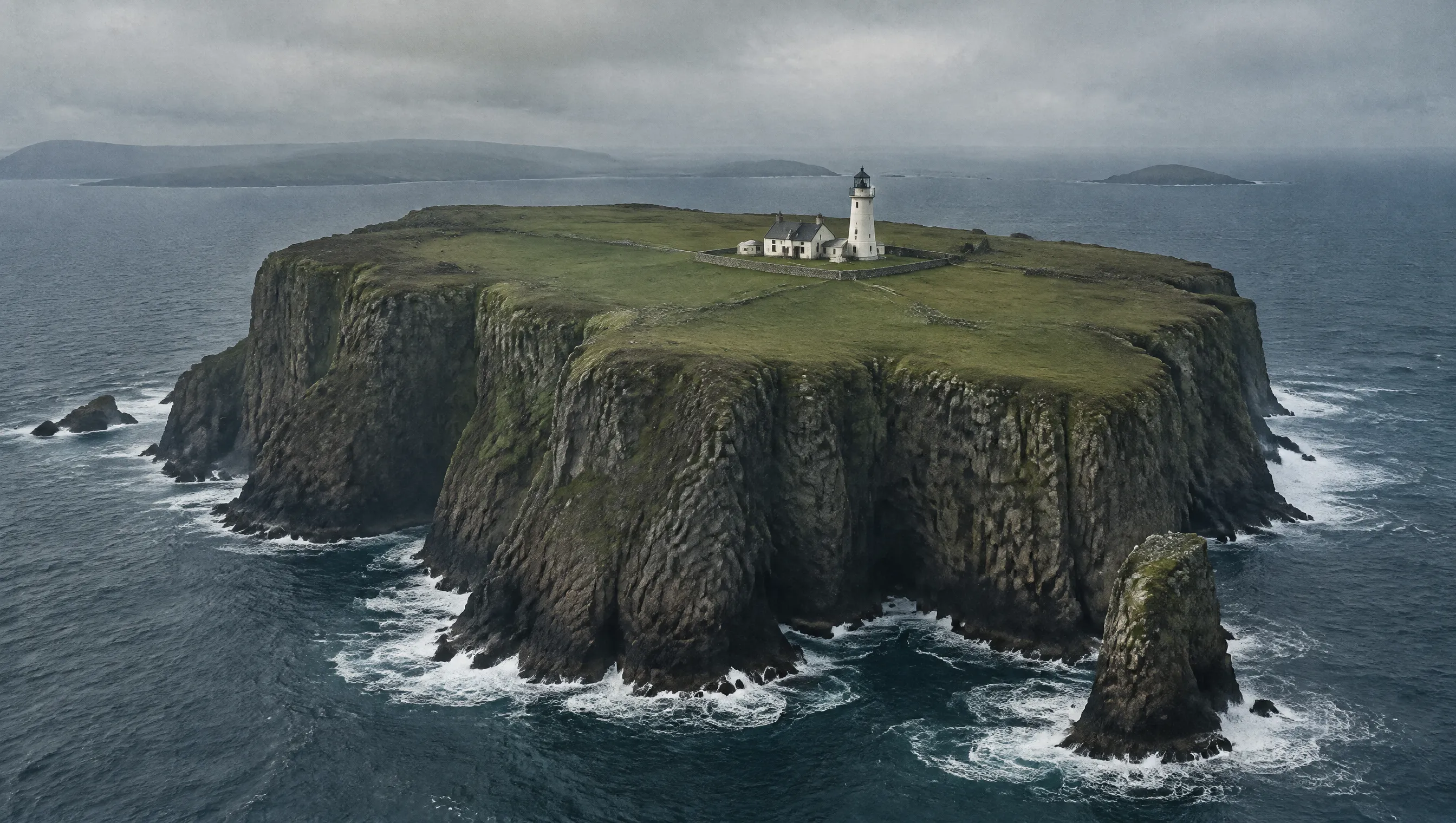
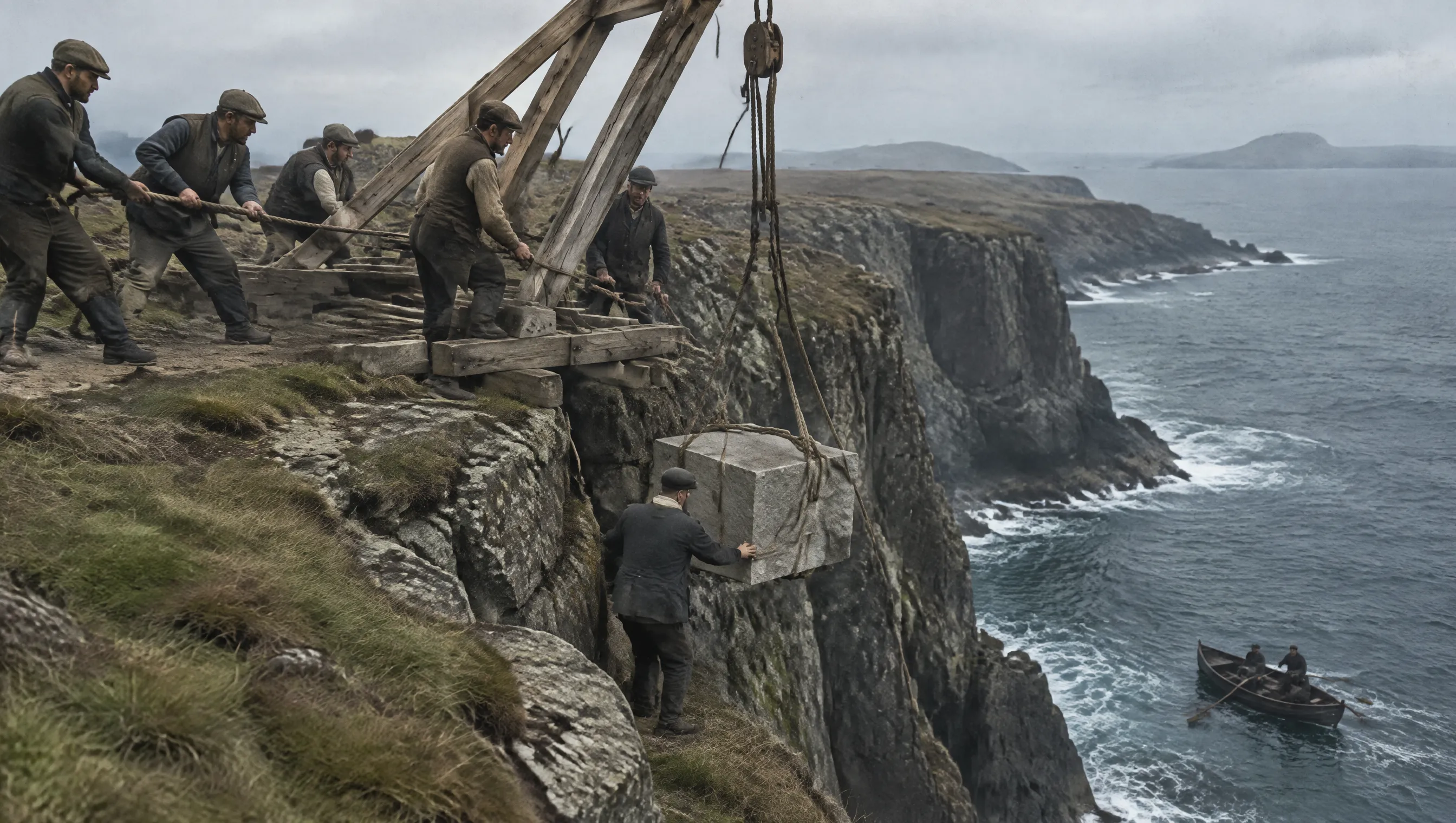
- 2:52The Light Goes Out
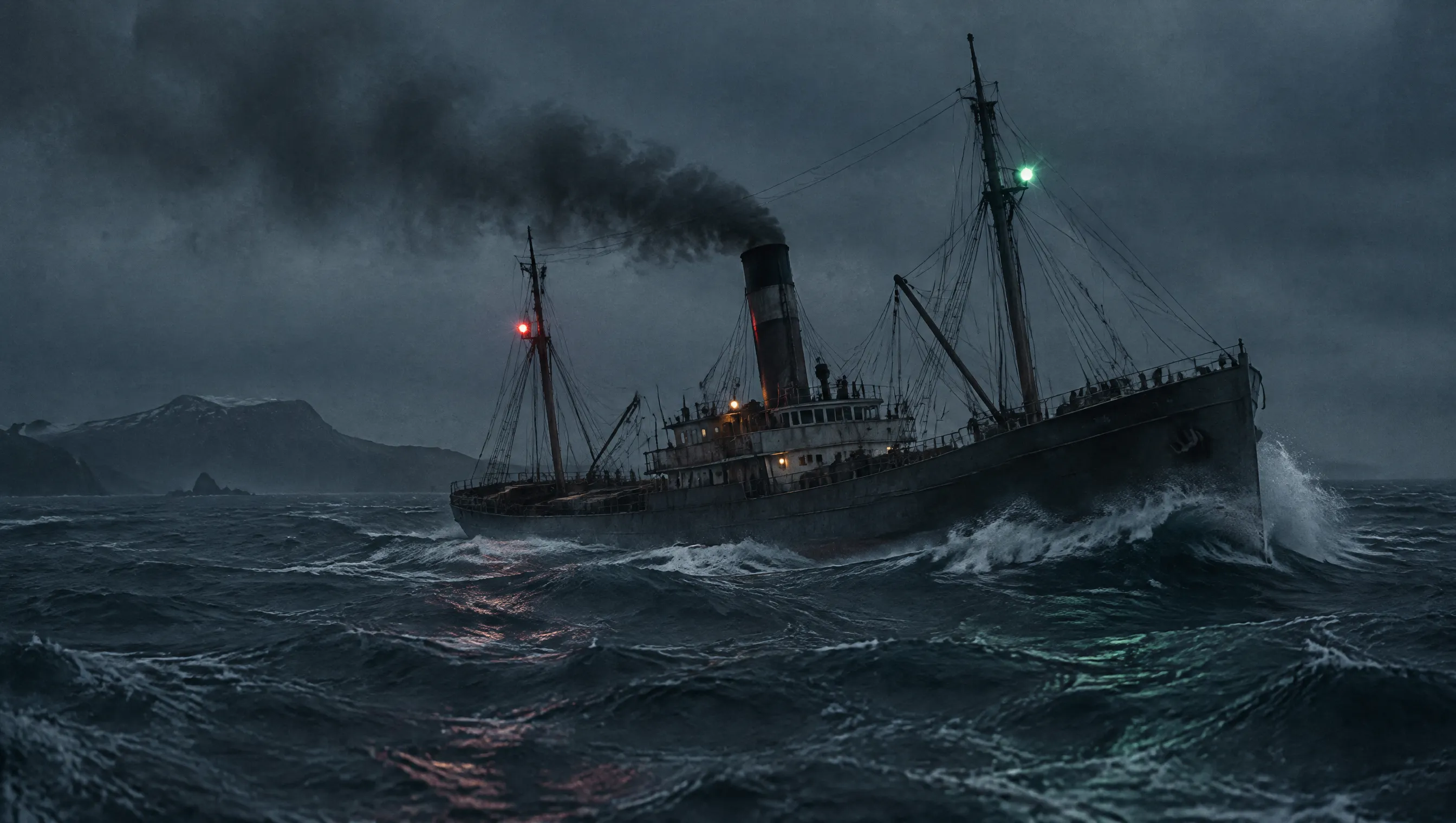
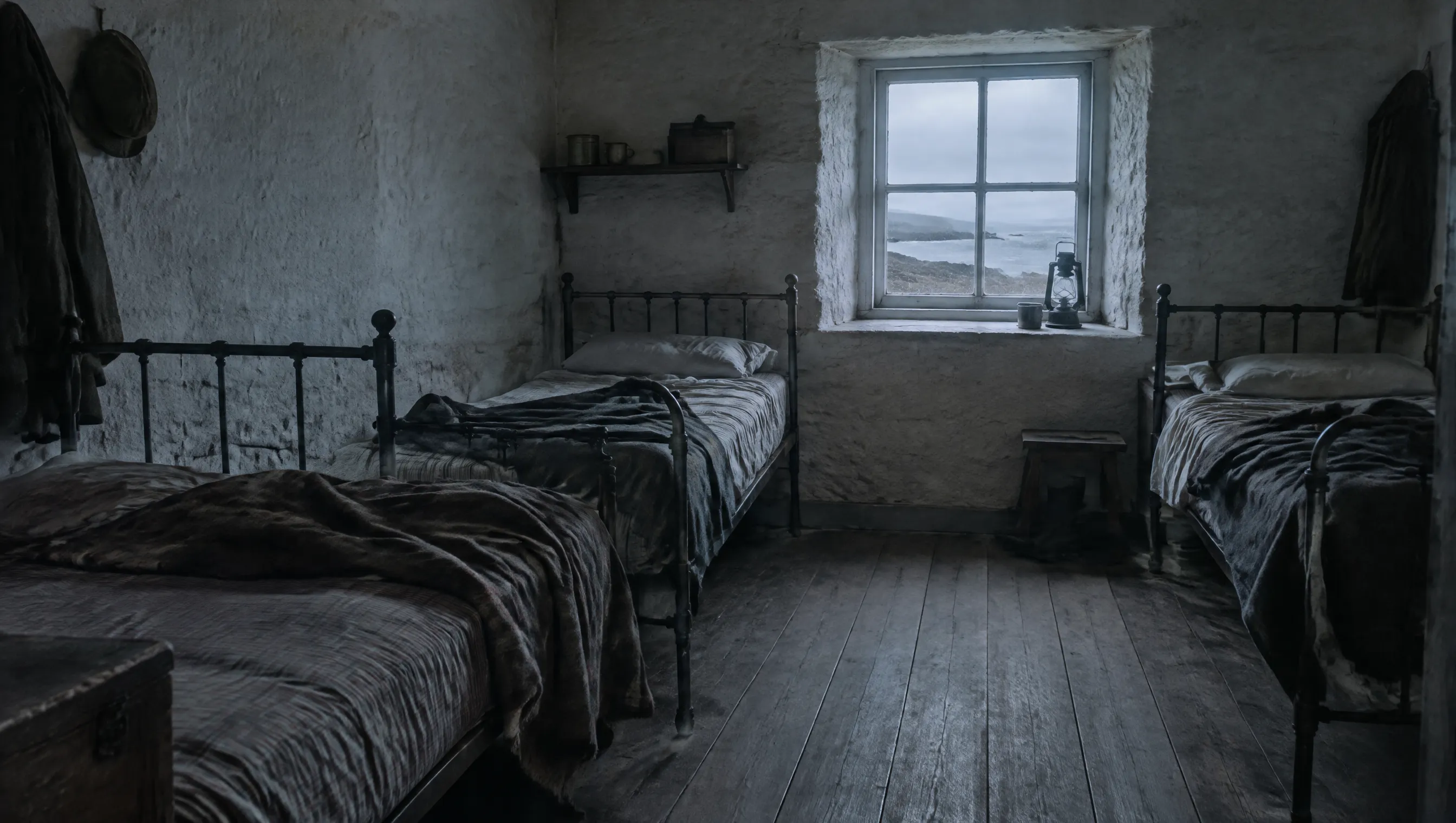
- 3:54The Fake Logbook
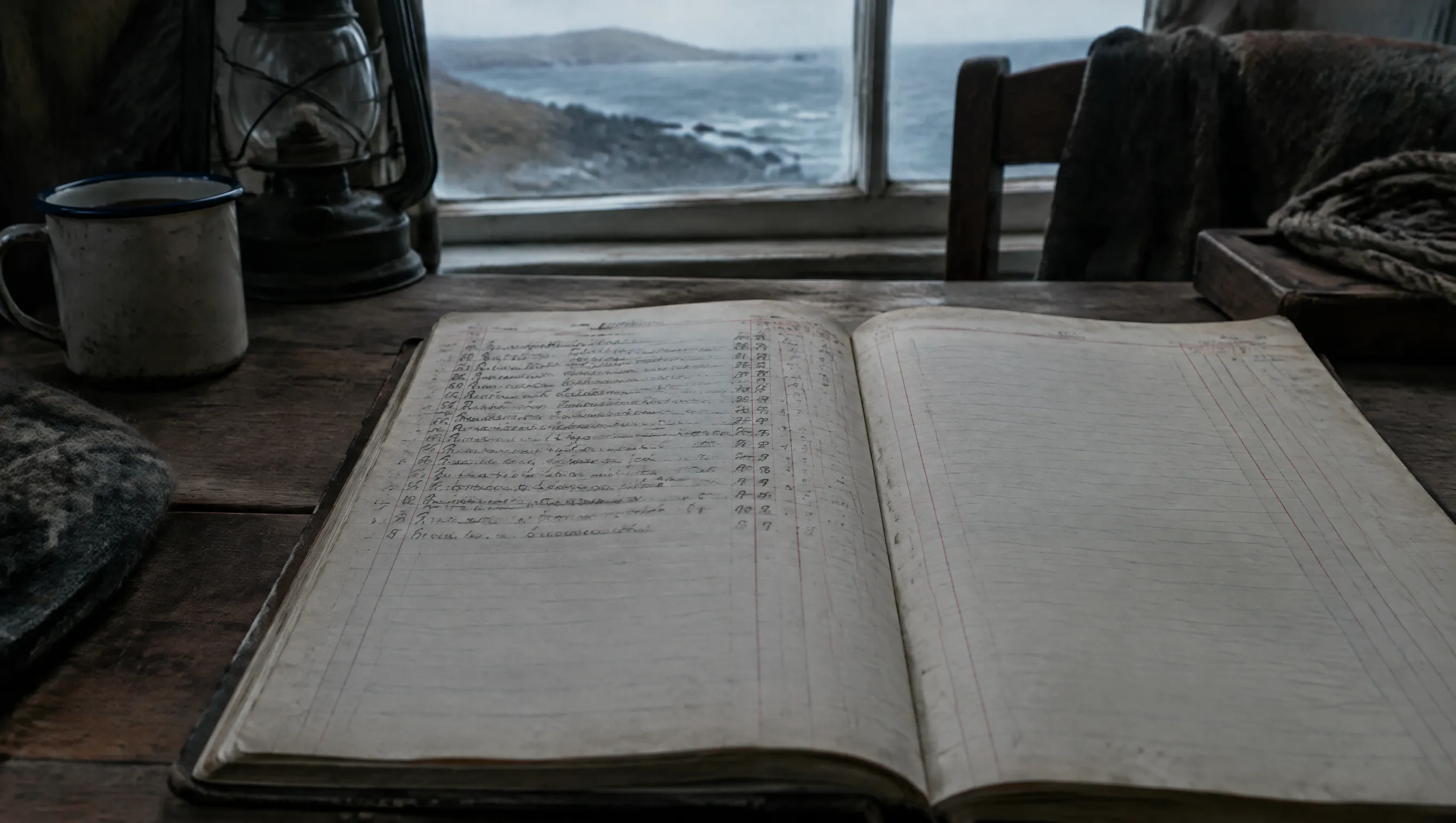
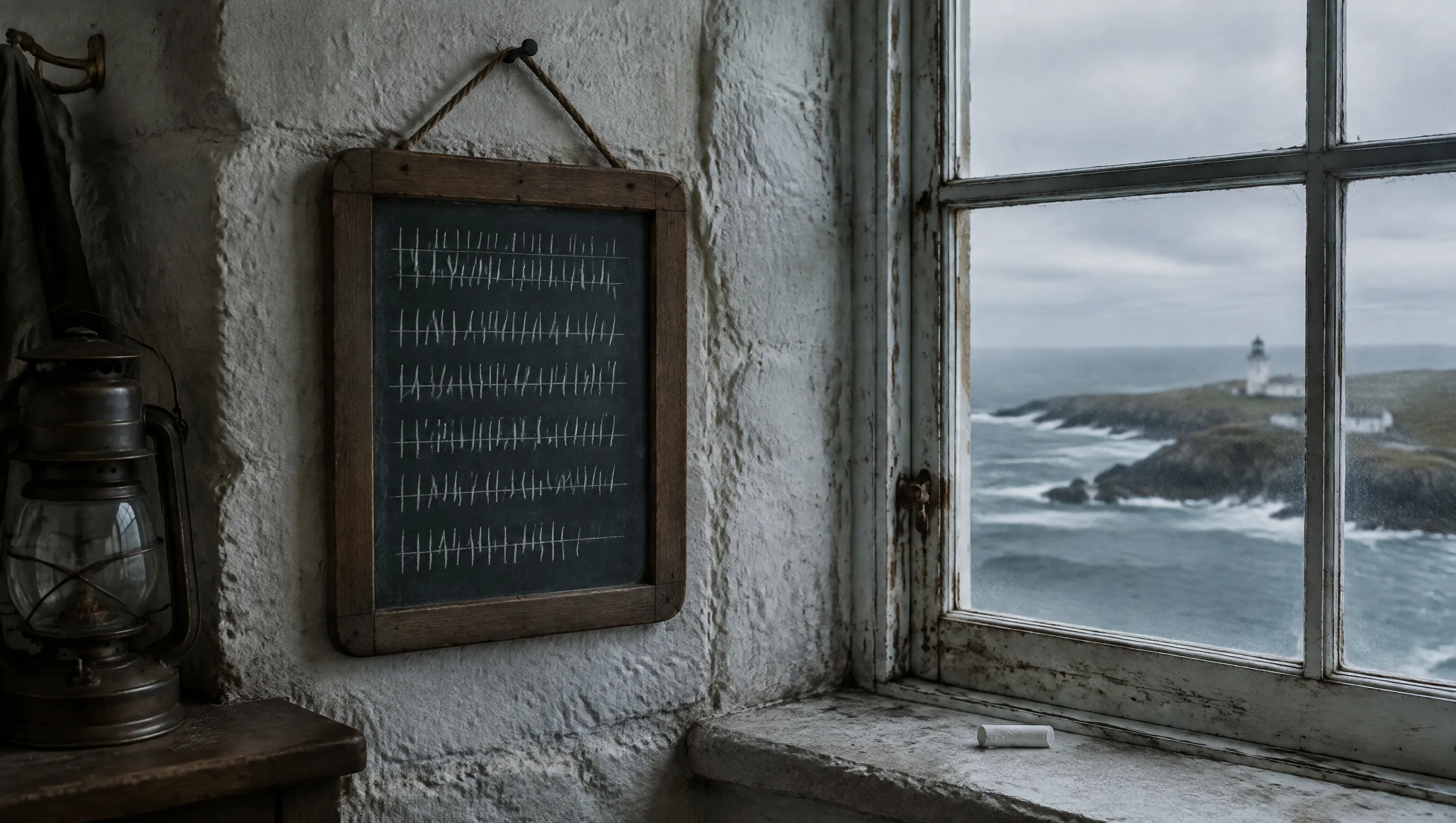
- 6:49The West Landing
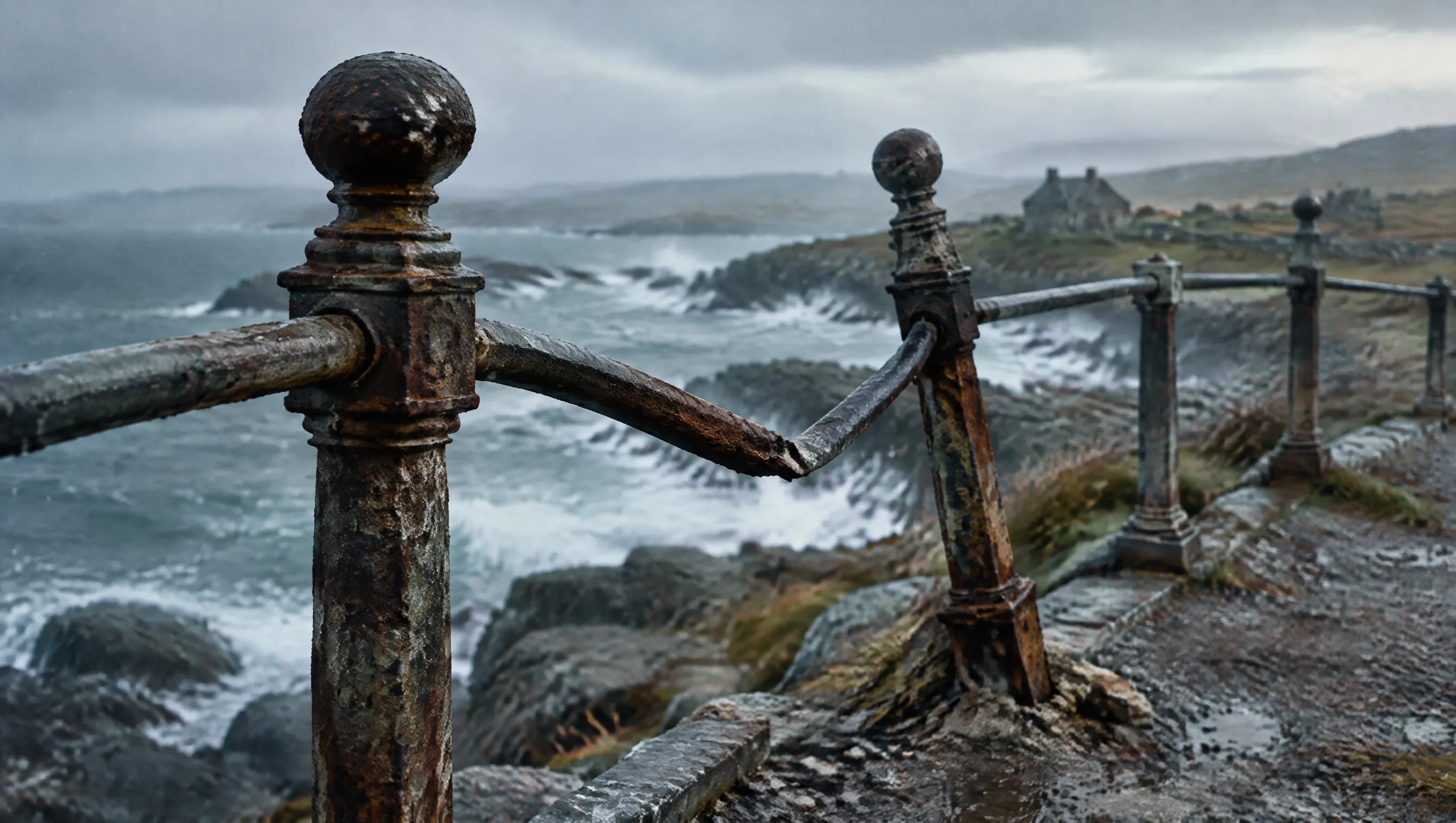
- 9:03The Coat on the Hook
- 11:25The Red Ink
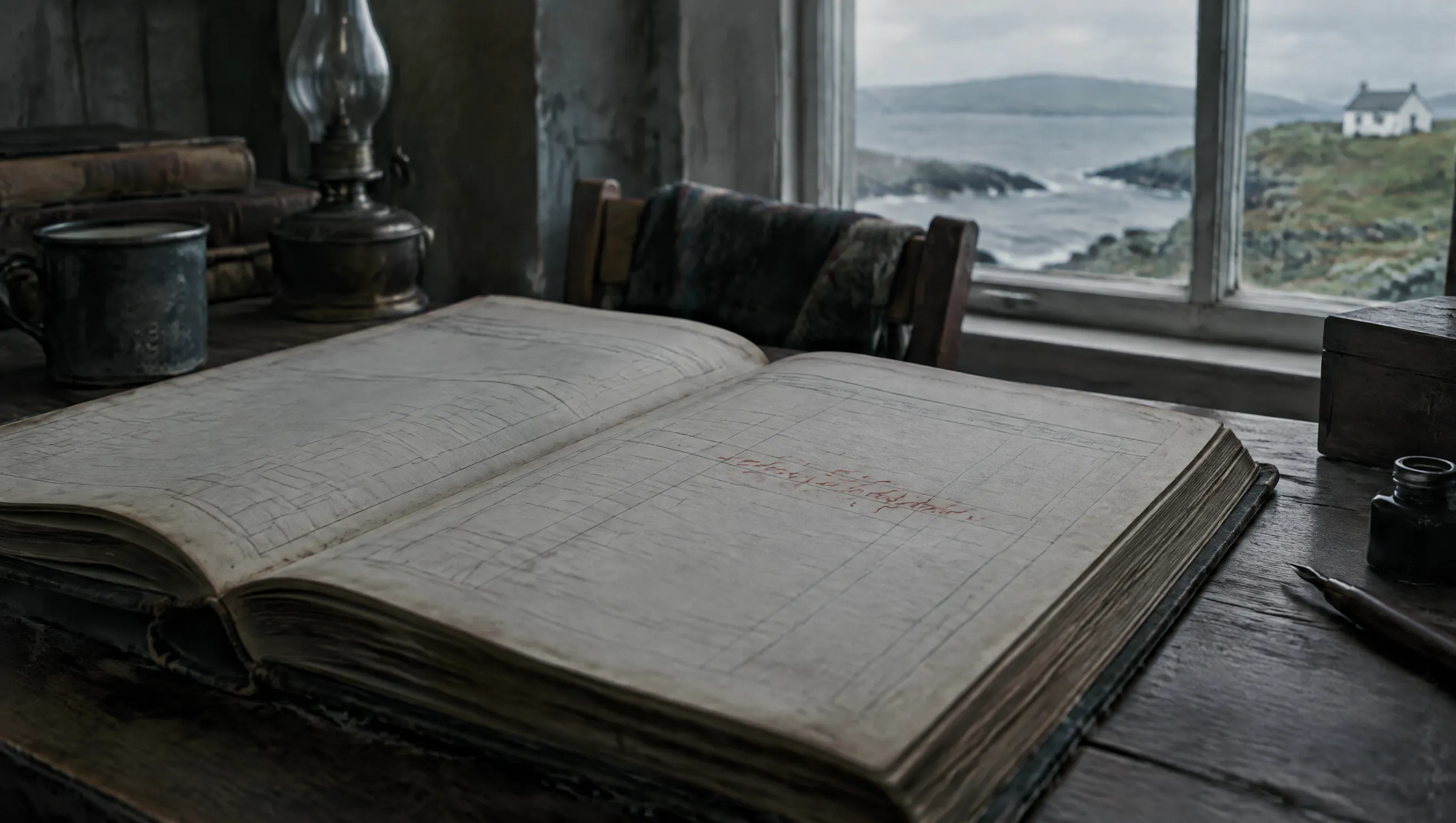
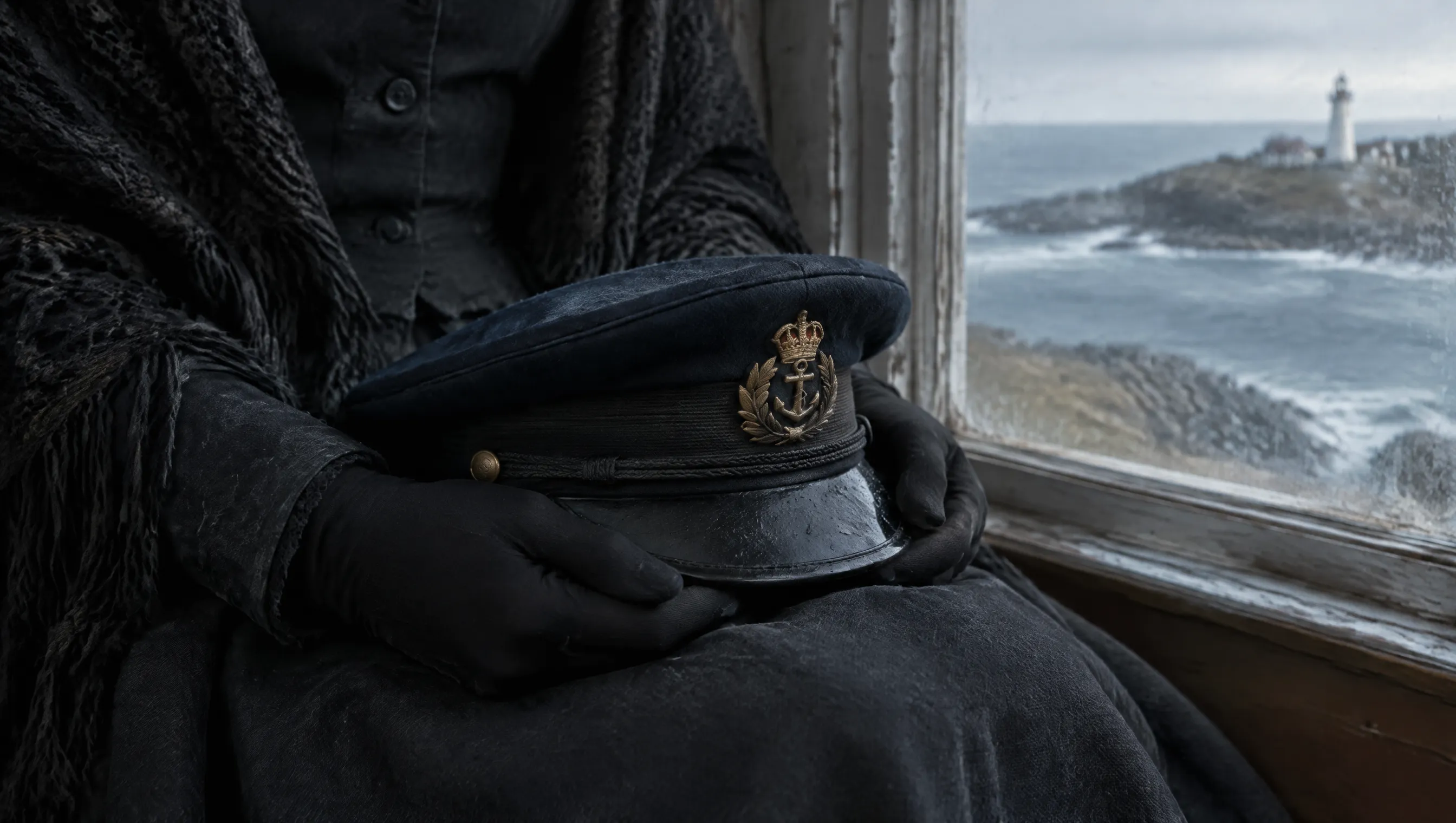
- 12:05What Really Happened
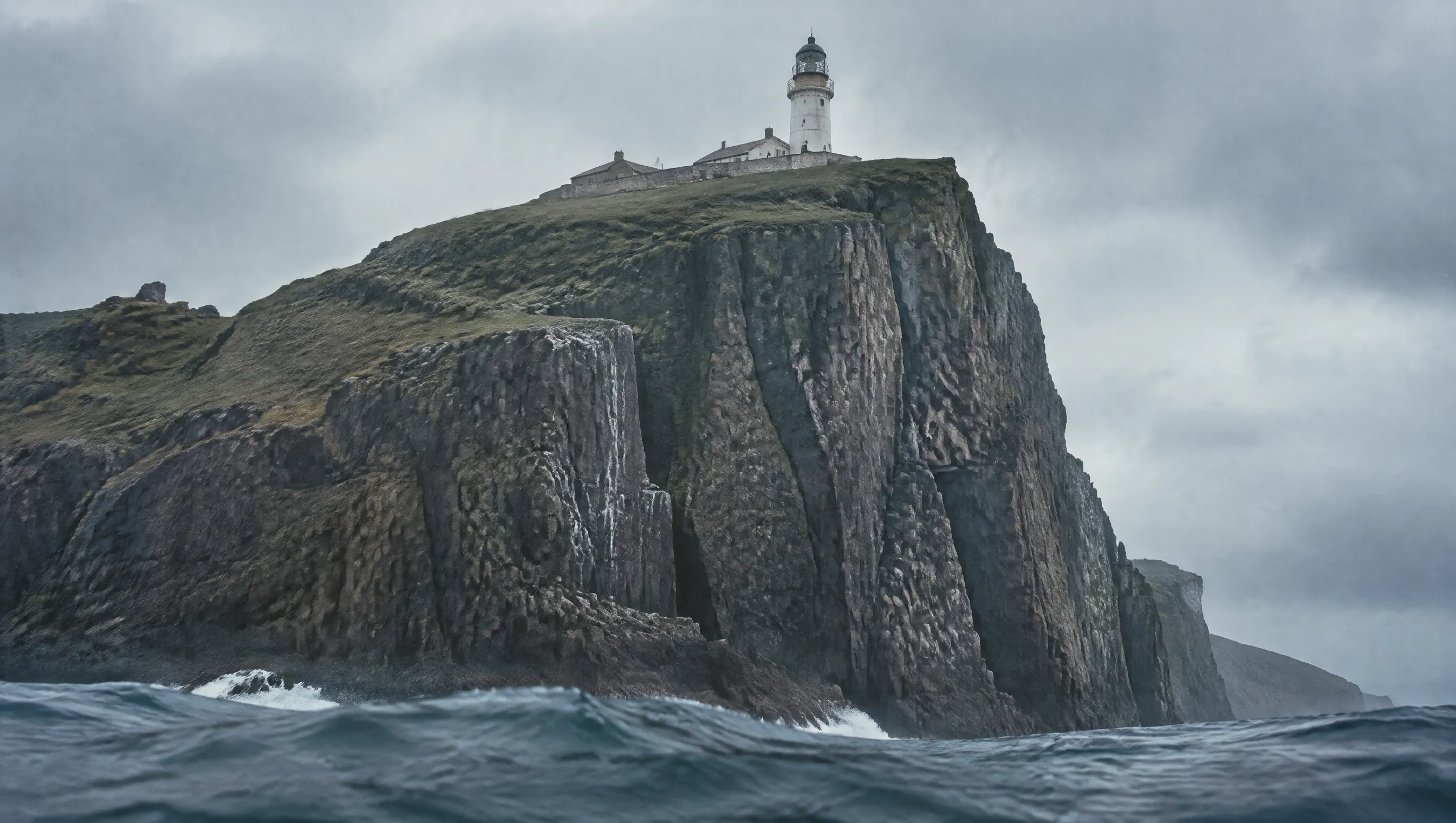
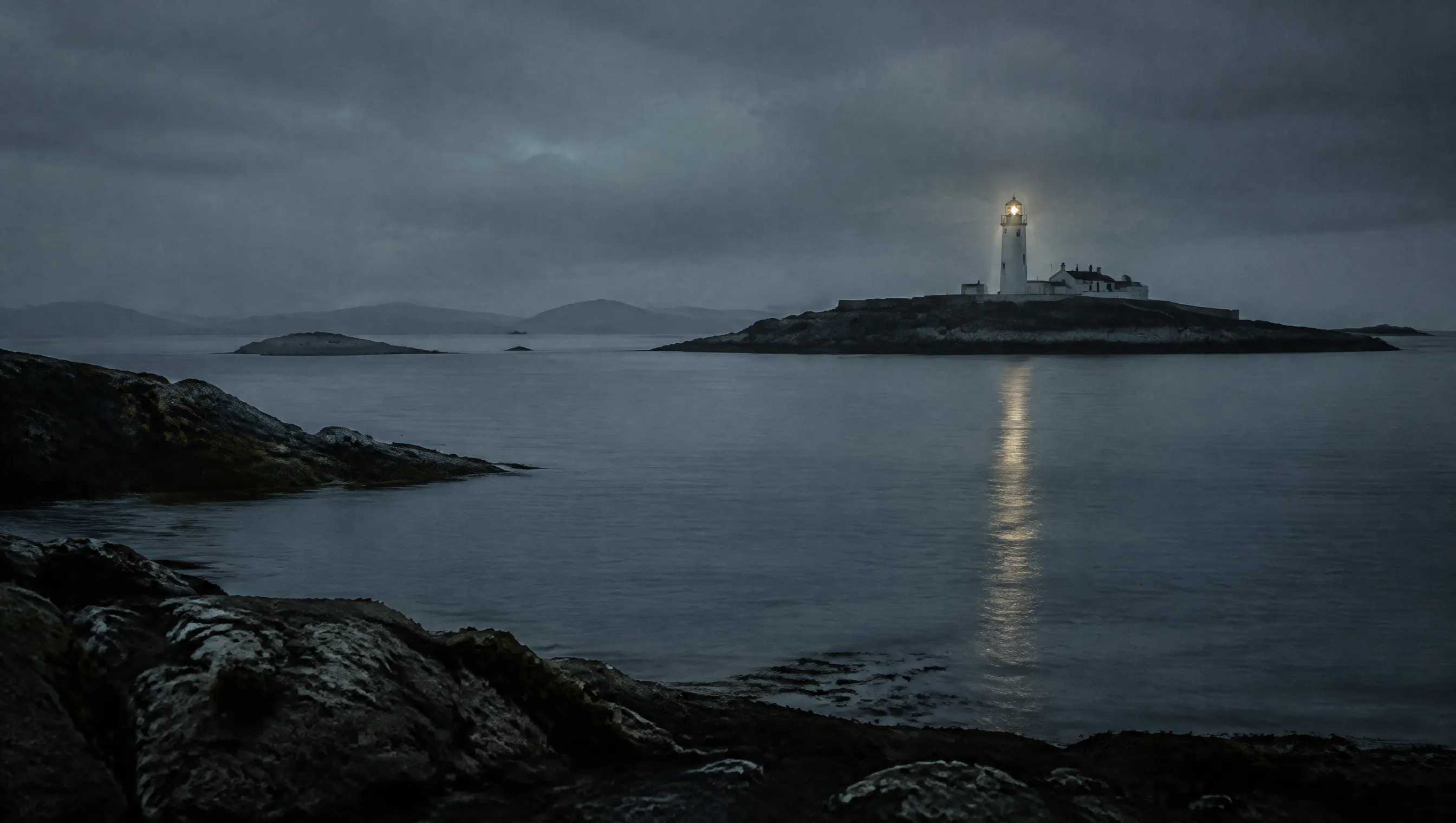
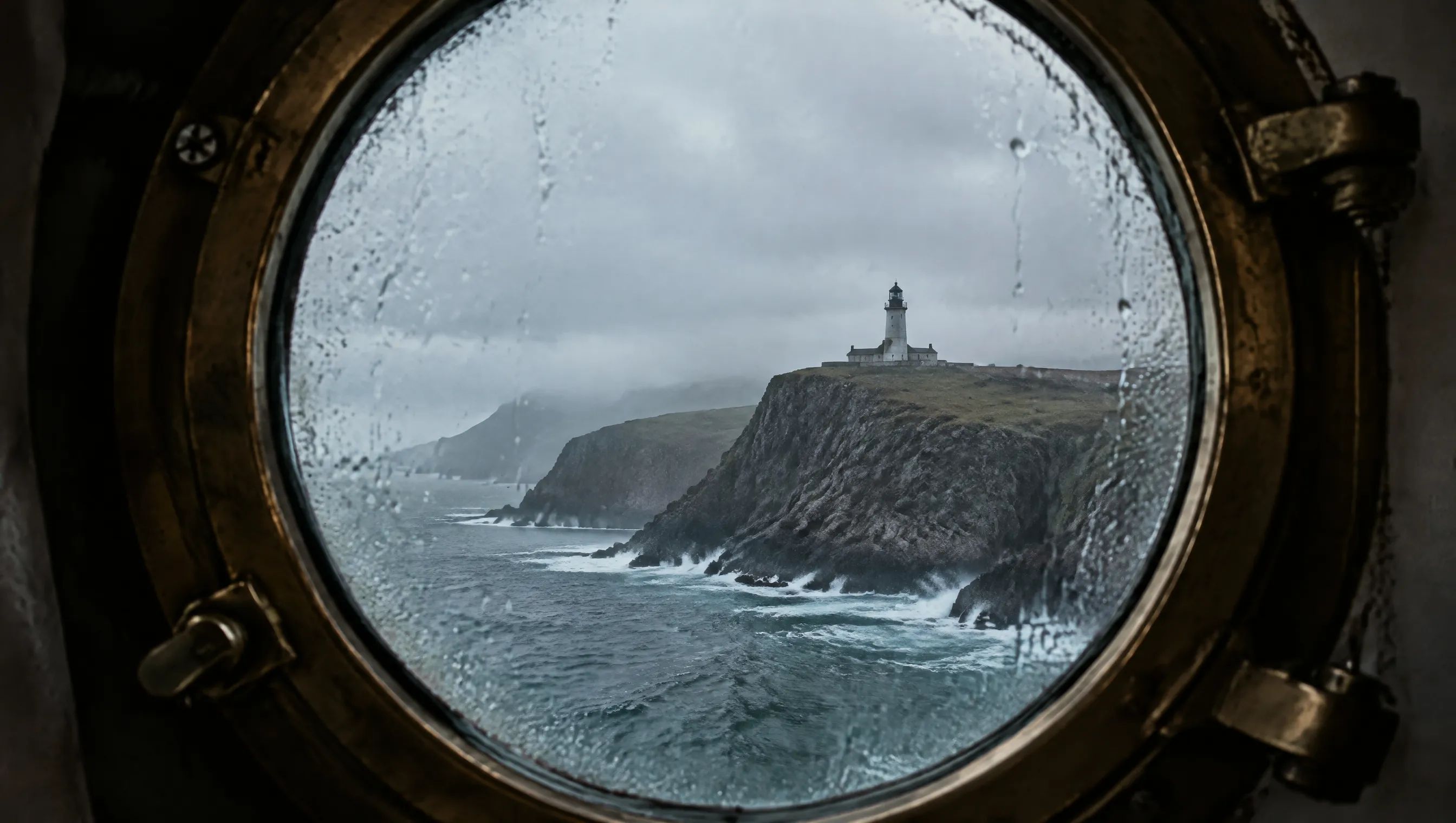
AI-generated reconstruction, not an archival photograph.
Timeline
- 1895–1899The station is built to a design by David Alan Stevenson. Landings are cut on the east and west sides of the island, with steps and a cable tramway up to the summit.
- 7 December 1899The Flannan Isles light is lit for the first time, more than a hundred metres above the sea.
- December 1900On the rock: James Ducat, principal keeper; Thomas Marshall, second assistant; and Donald McArthur, an occasional keeper covering for William Ross, who is on sick leave. Joseph Moore is ashore on leave.
- 13 December 1900The last entry written into the station's logbook.
- 15 December 1900The lamp is put out in the morning, cleaned and filled, and the readings are chalked on the slate. Muirhead later judged the men were on duty "up till dinner time" — in 1900, the midday meal.
- 15 December, about midnightThe steamer Archtor, bound from Philadelphia to Leith, passes the islands. Her officers cannot see the light.
- 18 December 1900The Archtor docks at Leith and reports the light out.
- 20–25 December 1900The relief ship Hesperus is due on the 20th. The weather holds her in harbour for six days.
- 26 December 1900The Hesperus reaches the island about noon. No flag, no boxes on the landing, nobody on the steps. Joseph Moore goes up alone and finds the station empty.
- 28 December 1900Moore writes his account of what he found — the closest thing the case has to an eyewitness record.
- 29 December 1900Superintendent Robert Muirhead inspects the station and both landings. The east landing is in order; the west landing is not.
- 8 January 1901Muirhead reports. His conclusion: the men had gone down to the west landing to secure the box of mooring ropes, and an unexpectedly large roller swept them away.
- 1912Wilfrid Wilson Gibson publishes the poem 'Flannan Isle', which adds an untouched meal and an overturned chair. Neither is in any document.
- 1925Flannan becomes one of the first Scottish lights to receive messages from the shore by wireless telegraphy.
- 28 September 1971The light is automated. No keeper has lived on Eilean Mòr since.
- 1998Mike Dash goes back to the records and shows that the famous logbook entries are not in them.
- December 2025Plans to restore the keepers' shore station at Breasclete on Lewis are approved, with community and interpretation space, an archive and holiday lets.
The companion book
The video is thirteen minutes. This is the whole story, from the documents: the telegram, the relief keeper’s letter and the superintendent’s report, quoted in their own words. Everyone involved, eleven pieces of evidence with what each one shows and what it does not, and the legend taken apart layer by layer — the fake logbook, the untouched meal, the poem they came from. With an honest list of what nobody knows, and every source.

The Last Logbook: The Flannan Isles
Three lighthouse keepers, one Atlantic rock, and the logbook that was never written
61 pages · PDF + EPUB · $6.99
Researched and written with AI assistance. Every fact is checked against the sources listed in the book — the full note.
Questions people ask
What happened to the Flannan Isles lighthouse keepers?
Three keepers — James Ducat, Thomas Marshall and Donald McArthur — were on Eilean Mòr in December 1900. The relief ship found the station empty on 26 December. The official investigation by Superintendent Robert Muirhead concluded that the men had gone down to the west landing on the afternoon of 15 December to secure the box of mooring ropes, and that an unexpectedly large sea came up the rock and swept them away. Muirhead called it the most likely explanation rather than a certainty, and no body was ever recovered.
Was the famous Flannan Isles logbook real?
No. The dramatic entries quoted in most retellings — a storm unlike any in twenty years, one keeper weeping, the men praying, a final line reading "God is over all" — are not in any record. The station logbook stops on 13 December, and the slate carries only routine weather readings. Mike Dash went back to the Northern Lighthouse Board papers and published his findings in Fortean Studies in 1998: the entries had been added to the story long afterwards and copied from one retelling to the next.
Where do the untouched meal and the overturned chair come from?
From a poem. Wilfrid Wilson Gibson published "Flannan Isle" in 1912, twelve years after the disappearance, and imagined the relief party finding a meal laid and never eaten and a chair knocked over. Joseph Moore, the keeper who actually walked into the kitchen, wrote the opposite: the utensils were "all very clean, which is a sign that it must be after dinner some time they left".
What did the superintendent find at the west landing?
Muirhead recorded that the iron railings round the crane platform and along the path were displaced and twisted, and that a block of stone weighing upwards of 20 cwt — over a ton — had been dislodged from higher up and carried down onto the concrete path. The box holding the mooring ropes, kept in a crevice about 110 feet above the sea, had been washed away, its ropes "strewn in the crevices of the rocks near the crane platform". A lifebuoy fastened to the railings had gone, and the ropes holding it had not been touched — scraps of canvas still clung to them, so the sea had torn it off, in Muirhead's words, "even at this great height (110 feet above sea level)". The east landing was undamaged.
Why does it matter that one keeper left his coat behind?
Muirhead and Moore went through the keepers' outdoor clothing. Ducat was wearing sea boots and a waterproof, and Marshall sea boots and oilskins — what you put on to work at a landing in weather. McArthur's coat was left behind, and Moore concluded that he had gone out in his shirtsleeves. The rule was that the light was never left unattended, so one man should have stayed inside. The coat is the only piece of evidence that says anything about the order of events: two men went out dressed for the job, and the third followed without stopping.
Were the keepers ever found?
No. In the Northern Lighthouse Board register of lightkeepers, the same words were written in red ink against the names of James Ducat and Thomas Marshall: "Disappeared on or about 15 December 1900." Donald McArthur, as an occasional keeper, was not in that register at all. In the register of deaths the cause for all three is given as "probably drowning". Nothing was ever recovered from the sea.
Sources
Primary records
- Telegram from Captain Jim Harvie, master of the Hesperus
James Harvie · 26 December 1900 · Quoted in the Northern Lighthouse Board account of the station
- Letter describing what he found in the station
Joseph Moore, relief keeper · 28 December 1900 · Quoted in the Northern Lighthouse Board account and in later studies
- Report on the disappearance of the Flannan Isles keepers
Robert Muirhead, Superintendent · 8 January 1901 · National Records of Scotland, NLC3/1/1
- Registers of lightkeepers, 1837–1921
National Records of Scotland, NLC4/1/3
Books
- The Lighthouse: The Mystery of the Eilean Mor Lighthouse Keepers
Keith McCloskey · 2014 · The History Press
Institutions and archives
- Flannan Isles — the history of the station
Northern Lighthouse Board
- Flannan Isles lighthouse keepers: the disappearance
2023 · National Records of Scotland
Papers
- The Vanishing Lighthousemen of Eilean Mòr
Mike Dash · 1998 · Fortean Studies — the study that showed the famous log entries are not in the records
Books we recommend
Every book listed is one we actually used. These are not affiliate links.
- The Lighthouse: The Mystery of the Eilean Mor Lighthouse Keepers
Keith McCloskey